
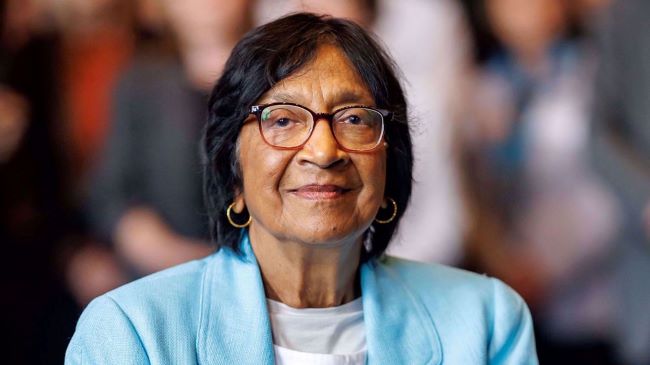
Nobel peace prize laureate Navi Pillay condemns US sanctions against ICC
South African jurist Navi Pillay, this year’s Nobel Peace Prize recipient, has strongly criticized Washington’s latest sanctions against the International Criminal Court, describing them as “unheard of, unacceptable” and expressing concern for the safety and security of the tribunal’s personnel.
Speaking via video link from Nuremberg at an event hosted by the Nobel Peace Center in Oslo on Saturday, Pillay said the measures had heightened anxiety over the future of international courts, particularly the ICC, which is based in The Hague.
“There is so much tension and anxiety over the continued existence of international courts, mainly the International Criminal Court in The Hague,” she said, adding that hundreds of court employees felt threatened.
Pillay, 85, also questioned the decision to impose sanctions on judges for carrying out their judicial duties.
“Most importantly, sanctions have been announced by one country against the judges, just for the judicial orders they issue. This is unheard of, unacceptable,” she said.
The Norwegian Nobel Committee announced Pillay as the recipient of the 2026 Nobel Peace Prize on Friday. Her selection drew criticism from both the United States and Israel, which have opposed the ICC and its actions.
Hours after the announcement, Washington unveiled additional sanctions against the court, prompting criticism from ICC member states and the United Nations.
US Secretary of State Marco Rubio said the measures would prohibit transactions with a “rogue court,” extending the Trump administration’s campaign against the tribunal.
The ICC has rejected the US sanctions, describing them as an attack on international law.
In a statement responding to the measures, the court warned that “history will judge this moment.”
The sanctions come amid growing political pressure on international courts, including US measures targeting the ICC over its arrest warrants for Israeli prime minister Benjamin Netanyahu and former minister of war Yoav Gallant over war crimes and crimes against humanity in Gaza.
Pillay received the 2026 Nobel Peace Prize following her work in international justice and human rights, including leading a United Nations inquiry that concluded Israel had committed genocide against Palestinians in the Gaza Strip.
Pillay previously served as a judge at the International Criminal Tribunal for Rwanda and the International Criminal Court.
She was also the UN high commissioner for human rights from 2008 to 2014 and has served as an ad hoc judge at the International Court of Justice in proceedings concerning the genocide against the Rohingya population in Myanmar.
US President Donald Trump, who has repeatedly expressed a desire to receive the Nobel Peace Prize himself, condemned the committee’s decision as “a disgraceful and embarrassing decision.” Speaking at a rally in Syracuse, New York, he said he had “never heard of” Pillay.
Netanyahu also criticized the decision, saying the Nobel Committee had “lost its moral compass” by honoring Pillay, whom he called “a bigot.”


