
Muna family is bereaved
Professor Wallinjon Fombad Tenjericha Muna MD, PHD, FACC is no more. He died this Sunday morning February the 24th 2019. This item is still developing!!

Professor Wallinjon Fombad Tenjericha Muna MD, PHD, FACC is no more. He died this Sunday morning February the 24th 2019. This item is still developing!!

Cameroonian politician and opposition leader Maurice Kamto has told the military court that he is a civilian and doesn’t deserve to be tried and charged in a military court.
Kamto and his supporters are being charged of insurrection – a crime punishable with the death penalty, other charges include holding illegal gatherings and disturbing the peace the peace of the country.
Kamto, a leader of the Cameroon Renaissance Movement (MRC) and his supporters contested last year’s elections claiming that the country’s decade’s ruler Paul Biya had rigged the election.
He then called upon his supporters to hold protests in four major cities across the country which according to authorities distorted the peace and security of the nation.
The court later postponed his trail until next week in order for court to make a decision about the legality of his trial.
PlustvAfrica

The West Africa Network for Peacebuilding (WANEP) has called for urgent attention on the deteriorating crisis in Cameroon and its implication for stability in West Africa. A statement issued by WANEP and copied to the Ghana News Agency said the organisation wished to express its concern and to draw global attention to the deteriorating situation in Cameroon.
It said the current violent agitations going on in the country by the English-Speaking North West and South West regions had historical origins and regional and international significance. It said by virtue of its shared history and geographical proximity, Nigeria had the greatest burden, and perhaps more in the quest for a durable solution to the crisis.
It noted that the influx of more than 40,000 registered refugees, with tens of thousands more living in host communities, constitute a huge humanitarian burden to a country that is already grappling with its own internal displacement as a result of the Boko Haram and herders-farmers crisis.
Since 2017, hundreds of thousands of Nigerians living in Cameroon following the 1967-70 war, and who dominate the trade and commerce landscape, were returning to Nigeria in their numbers.
About 500,000 had been internally displaced in Cameroon, the statement said. According to Cameroon’s private sector affiliate, Groupement inter-patronal du Cameroun (GICAM), in its September 2018 Report, the economic and financial cost of the crisis had been enormous: over 566 million dollars lost in business deals; with 4,062 billion-dollar infrastructure losses, 6,434 formal sector jobs and 8000 jobs lost in the informal sector.
“With close to half a million internal displacements, the total losses in the affected villages and remote towns are yet to be ascertained,” it said. “Though there is no official number of casualties, reports of a dirty war that is indiscriminately targeting civilians is alarming.”
The statement said evident by horrific pictures and videos, the Military, as well as the separatist fighters known as the “Amba Boys”, were committing atrocities that amounted to war crimes and crimes against humanity.
Summary executions, indoctrinate arrests, kidnap for ransom, burning of schools and hospitals, and the burning of houses in a typical scorched-earth policy were taking place on a regular basis. School enrolment had dropped drastically in a region that used to take pride in its exceptional educational records, the statement said.
It said the allegations that a genocide might be unfolding while the global community watched were worrisome. Several calls for dialogue in resolving the crisis have not yielded any result.
“Conscious that Cameroon is still embroiled in the fight against Boko Haram in its Far North Region, and a threatening incursion in its eastern border by Central African Republic militant/rebel groups and is currently facing a post-election challenge by the main opposition group, WANEP wishes to reiterate that hardcore security and military approach cannot resolve this crisis,” the statement said.
It said in line with the African Union’s resolve to ‘Silence the Guns in Africa by the Year 2000 and in accordance with the ECOWAS Conflict Prevention Framework, WANEP strongly condemned all the atrocities going on in the English-Speaking part of Cameroon and calls on perpetrators to abide by international laws and conventions.
It expressed shock at the level of violence going on and the silence of the international community and international media as well as the rather nonchalant attitude of other non-state actors in Cameroon.
The statement called for immediate cessation of hostilities and commencement of a facilitated dialogue by willing partners in the spirit of solidarity and humanity. It called for an independent investigation into the atrocities and crimes against humanity and for perpetrators to be held to account.
“WANEP wishes to recall that Cameroon was a founding member of the WANEP Board in 1998 and, therefore, expresses her readiness to assist in whatever way feasible, to work towards a peaceful settlement of the crisis in Cameroon.”
Ghana News Agency

Cameroon’s president, Paul Biya, and first lady, Chantal Biya, are scheduled to leave Yaounde, Cameroon, for Geneva, Switzerland, on bord a chartered aircraft tomorrow February 24, 2019.
The luxurious airplane, which has been rented for tens of millions of taxpayer’s money, will also take the reclusive leader to France. He is expected to spend several weeks in Geneva where he will be seeking medical attention.
Meanwhile, the Brigade Anti-sardinards (BAS) – a Diaspora-driven initiative designed to raise awareness of the despicable military, economic and political situation in the country – which had issued a warning to the Intercontinental Hotel in Switzerland, which hosts Mr. Biya and his large entourage each time he is in Geneva, have begun taking positions across continental Europe, particularly in Switzerland, to disrupt Mr. Biya’s health tourism program.
More than 100 members of the BAS are already in Geneva while hundreds more are expected to leave Germany, Belgium and France today evening to ensure that the Cameroon leader does not know any peace during his time in Europe.
Mr. Biya and his entourage are very likely to face lots of protests in Geneva as the country’s Diaspora is prepared to give the dictator a very bad name for his brutal killings in Southern Cameroons and the imprisonment of Maurice Kamto, the country’s opposition leader.
It should be recalled that Mr. Biya had declared war against the country’s English-speaking minority in 2017 and since his declaration of war, more than 3,000 civilians have been killed by Mr. Biya’s army, more than a million civilians have been displaced, with more than 400,000 seeking refuge in neighboring Nigeria that is collaborating with the Yaounde government in its determination to slaughter as many Southern Cameroonians as possible.
Meanwhile, more than 170 villages have been burnt down by soldiers who are out on a collective punitive expedition which is only making the secession of the English-speaking minority a likelihood.
It has been reported that the Cameroon strongman and his government are seeking to change his itinerary given that they are aware of the protests waiting for them in Switzerland and France.
The profile picture attached to this report is a photo of the airplane rented for the presidential couple and their itinerary. More will be yours in the days ahead.
By Soter Agbaw-Ebai in the United Kingdom

President Donald Trump said Friday he is nominating Kelly Craft, his envoy to Canada, to be the next US ambassador to the United Nations.
“Kelly has done an outstanding job representing our Nation and I have no doubt that, under her leadership, our Country will be represented at the highest level,” Trump said in a pair of tweets announcing his pick.
If confirmed by the US Senate, she would fill the post that has been vacant since Nikki Haley, a former South Carolina governor and rising star in the Republican Party who stepped down from the UN job late last year.
Craft was nominated one week after Trump’s previous choice, former Fox News anchor and State Department spokeswoman Heather Nauert, withdrew from consideration amid criticism that she lacked the experience for one of the top diplomatic posts.
Secretary of State Mike Pompeo offered quick praise for the nominee. “Ambassador Craft has been an outstanding advocate for America’s national security and economic interests in Canada and she is extremely well-qualified to do the same at the United Nations,” he said in a statement.
Craft was a major supporter of George W. Bush, who as president appointed her to serve as a US delegate to the United Nations, representing Washington at UN meetings. The businesswoman from Kentucky, believed to be 56-years-old, has been a major Republican donor.
She raised eyebrows in 2017 as the new US ambassador in Ottawa — and the first woman in that post — when she said she believes “both sides” of climate science. “I think that both sides have their own results, from their studies, and I appreciate and I respect both sides of the science,” Craft told the Canadian Broadcasting Corporation.
She is married to Joe Craft, who is president of Alliance Resource Partners, which describes itself as the second largest coal producer in the eastern United States. Joe Craft was worth an estimated $1.4 billion in 2012, according to Forbes magazine.
Open Secrets, a non-profit group that tracks money in politics, says Craft donated $1 million to Trump’s 2017 inauguration fund. He also donated $371,100 to candidates, all Republicans, during the 2018 election cycle, the organisation said.
(AFP)

Iran has been adhering to a deal with world powers limiting its nuclear programme, the UN atomic watchdog said Friday, as diplomatic wrangling continues over the future of the accord.
The latest report from the International Atomic Energy Agency confirmed that Iran was still complying with the 2015 Joint Comprehensive Plan of Action (JCPOA) with global powers under which Tehran drastically scaled back its nuclear programme in return for sanctions relief.
The IAEA’s latest report showed that over the past three-month period, Iran’s stock of heavy water had risen from 122.8 to 124.8 metric tonnes and that it held 163.8kg of enriched uranium, up from 149.4kg in November.
Both levels are within the limits foreseen by the JCPOA.
Trump’s withdrawal
President Donald Trump pulled the United States out of the Iran nuclear deal last May, reimposing US sanctions on Iran’s economy and lifeblood oil industry that were lifted under the 2015 agreement.
European powers that signed the deal – France, Britain and Germany – have sought to cushion the blow to Iran of those sanctions. They are setting up a new channel for non-dollar trade with Iran but diplomats say it will not be able to handle the big transactions Iran says it needs to keep the deal afloat.
Setting up that channel, however, has angered Washington for undermining its effort to choke Iran’s economy in response to Tehran’s ballistic missile programme and its influence on the wars in Syria and Yemen.
US Vice President Mike Pence last week called on those European powers to follow Washington in pulling out of the agreement despite their long-held position that the deal is worth keeping as long as Iran sticks to it. But European leaders rejected this.
The Islamic Republic has long said that it wants nuclear power only for purposes of civilian energy.
(FRANCE 24 with AFP)
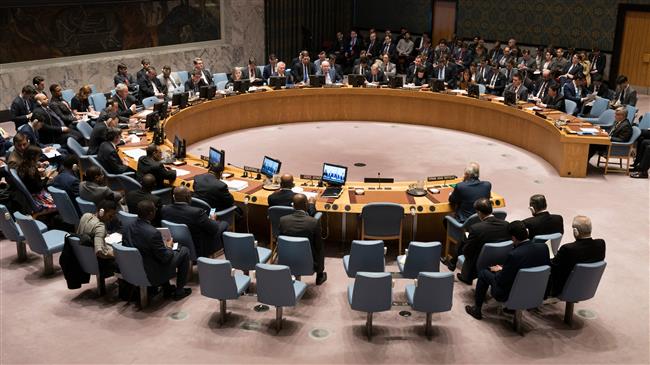
As reported in our last week’s editorial, the United Nations is seeking to deploy its staff in Cameroon’s two English-speaking regions. A report by the global body released on January 31, 2019, has slammed the government and armed groups in the country’s two English-speaking regions for the deteriorating humanitarian situation in the two regions. Produced in collaboration with humanitarian partners, the United Nations Office for the Coordination of Humanitarian Affairs (https://www.unocha.org/) report states that the global body is seeking US$ 15.2 million to start humanitarian operations in the Northwest and Southwest regions.
“As of 7 January, donors had provided 35 per cent of the US$15.2 million required as per the emergency response plan, according to the Financial Tracking Service (FTS). This amount constitutes the $5.1 million CERF allocation under the rapid response window. Additional contributions were received by other donors but not yet reported on FTS,” the report underscores.
The reports points out that the socio-political issues in and concerning the two English-speaking regions of the country have been a matter of contention throughout the post-colonial period. Political protests against perceived marginalization intensified in 2016 and in late 2017 violence erupted in North-West and South-West regions prompting violent clampdowns by security forces. With the increased deployment of defense forces and proliferation of non-state armed groups, the crisis has increasingly become characterized as one of armed conflict. Increased insecurity, violence and consequent widespread injury and civilian loss of life have forced thousands of families to flee their homes. Displacement continues to have serious consequences on the livelihoods and living conditions of the affected populations, the report says.
It stresses that “vulnerability has been further compounded by lack of access to farmland, by deterioration in medical and water facilities and limited access to education for children due to a violently enforced ban on schooling called for by armed groups.”
The report also points out that “little political progress has been made to resolve the conflict. The ‘Anglophone General Conference’ had been set to discuss the crisis on 21 November 2018 however it was postponed with no new date yet to be announced. Efforts continue at regional and national level and with the diaspora. The stay-home ‘Ghost Town’ protest continues to be observed every Monday across the two regions. There were heightened tensions on the 10th of January as the second day of the trial of the ex-leadership of the opposition movement was held in Yaounde. Numerous incidences of violence took place across the region. In some areas, particularly the Buea-Kumba axis, an effective ghost-town was observed between Monday 7th and Thursday 10th. The trial was adjourned until the 7th of February.
The global body is also concerned about the country’s political situation. “Escalating tensions in Francophone Cameroon including protests in Douala and Yaounde included the Anglophone Crisis in their discourse. Maurice Kamto leader of the main opposition party, the MRC, was arrested on 30 January in connection with these tensions. Tensions increased as the month of February approached with the stated intention of some armed groups to declare a ‘lockdown’ for the month which would prohibit movement similar to ‘Ghost Town’ Mondays. This was subsequently reduced to a ten-day period from 4th to 14th during which significant days for the opposition forces would fall. Namely the trial of the leadership, National Youth Day and the anniversary of the plebiscite which joined Southern Cameroons and Cameroon.
Regarding insecurity, the UN stresses that “Insecurity in the affected regions remains high, with continuing armed attacks and confrontations between the military and armed groups. The crisis further worsened from mid-2018 onward due to increased hostilities ahead of the presidential election. Movements continue to be restricted in the two regions due to a curfew in the North-West, a “No Movement” declaration by non-state actors and the increase of both official and informal checkpoints.”
“In the South West, on 3 January CDC workers of the Rubber Plantation in Tiko, Fako Division while at work were attacked by Non-state armed men (NSAG). They were tortured, and their toes and fingers cut off for working in the Plantation against the policy of armed groups. In January, troops clashed with armed groups across the two regions with ensuing fatalities and destroyed properties and vehicles. Military operations increased in both regions to counter armed group plans for February ‘lockdown’. Preventive displacement and stockpiling was ongoing at the time of writing of this report. Declining security situation during the month is expected,” the report says.
Hostilities have continued to claim civilian lives, from indirect fire and from disturbing reports of targeted killings. Urban attacks have resulted in deaths from cross-fire and civilian casualties have been reported as a result of raids on villages. In late January, large scale military operations were launched in the Bafut area resulting in numerous casualties for both combatants and civilians. On 25 January, the military killed 11 people they suspected of being armed separatists in Mpundu-Balong in the Southwest region. Incidents were also reported taking place in Marumba and Tiko amongst others. Abductions continue to be an ongoing concern.
The violence has uprooted 437,500 people from their homes and forced over 32,000 to seek refuge in neighbouring Nigeria. Humanitarian organizations are striving to scale-up their presence in the conflict-hit regions. Shelters, NFI and Education have been identified in the North-West and South-West regions as the most urgent needs. Almost 50 per cent of the displaced have settled in rural areas and have an increased need for shelter and non-food items. More than 80% of girls and boys no longer have access to schooling on a continuous basis because of the crisis, the report says.
The outlook for 2019 is one of emergency response as displacement continues due to the ongoing conflict. Vulnerability is compounded as services deteriorate and resilience is eroded. Access remains challenging as poor levels of understanding of humanitarian action persist and infrastructure is damaged in armed conflict related operations to deny mobility to opposing forces. Armed fighting and insecurity continue to be the principal impediment to the provision of assistance as well as a barrier to those in need in terms of reaching areas where they can receive aid, the report says.
The majority of those displaced are women and children. Protection is the principal humanitarian concern as the ongoing conflict is the main cause of human suffering. Food and shelter are also of concern as displacement continues apace. Needs across all sectors are high and are being further compounded as the conflict deepens. Of particular concern is access to water for areas requiring water transportation during days when movement is limited. Many of the conflict-affected populations are growing more vulnerable as the violence persists and humanitarian assistance remains inadequate, the report stresses.
The deployment of humanitarian actors to the field continues. A further allocation of CERF to Cameroon will in part support humanitarian activities in the North-West and South-West regions. As of 7 January, donors had provided 35 per cent of the US$15.2 million required as per the emergency response plan, according to the Financial Tracking Service (FTS). This amount constitutes the US$5.1 million CERF allocation under the rapid response window. Additional contributions were received by other donors but not yet reported on FTS.
The report states that the Humanitarian Response Plan will be launched on 20 February 2019. The number of people estimated to be in need of humanitarian assistance in 2019 has increased by 31 per cent compared to 2018, from 3.3 million to 4.3 million. The number of people who will be targeted for assistance has also increased from last year, from 1.3 million to 2.3 million. This increase is mainly attributed to emerging needs in the North-West and South-West regions. More than a quarter of people targeted by the response (28 per cent or 820,000 people) lives in the North-West and South-West regions, which are now priority areas of intervention. Sectors need US$ 93 million – or 31 per cent of the total appeal – to support 437,000 IDPs in these two regions, the West and Littoral, and 376,000 vulnerable host communities due to forced displacement and disruption of social and health services.
On the 22 January, the Ministry of Territorial Administration held the first meeting of the Emergency Humanitarian Assistance Coordination Centre in Yaounde as decreed by the Prime Minister on 21 November. The UN is expected to be invited to the next meeting. Antenna meetings in Buea and Bamenda have been indicatively planned for February. The humanitarian community continues to work towards a coordinated approach to ensure upholding of humanitarian principles while delivering urgently needed assistance.
The inter-cluster capacity mapping for the South-West Region has been completed and that of the North-West Region has been initiated. The Access Working Group reinitiated its activities in the New Year and continued its efforts on an access mapping. A repository of administrative requirements and procedures is being created and ground rules for field staff are being developed with the objective of strengthening a unified principled approach of all humanitarian actors vis-à-vis both parties to the conflict.
The report also stresses that six of the eight activated clusters, and the Areas of Responsibility (AoR) for Child Protection and Gender Based Violence were functional during the month. Education and Logistics were not staffed. Several clusters and AoRs were able to also implement coordination activities in the North-West and it is hoped that the others will follow in late February following the ‘lockdown’.
The report also underscores that the food security situation of internally-displaced populations and affected host and local communities in the North West and South West regions remains critical and continues to deteriorate as many of them cannot access their farms for crop production. The findings of the ongoing VAM/FSMA are expected to provide a clearer picture in terms of the severity levels and the geography of food insecurity. Preliminary results of the IPC Chronic Food Insecurity Analysis in the regions have indicated that poor households (with little or no income from both host and local communities) and IDPs could move from being moderately/borderline food insecure (Phase 2) to having acute food and livelihoods security needs (phase 3, Crisis) from February 2019.
In January, General Food Distribution by WFP took place in in Meme and Manyu Divisions in the South West region. As of 26 January, Food distribution has reached 17,000 beneficiaries for the month. WFP organized a Training for Rapid Emergency Food Security Assessment (EFSA) on 4-6 January. Data collection was also conducted. The preliminary results are expected to be released in early February.
At the same time, FAO’s emergency livelihoods projects are underway. The poultry project which aims to reach 1,000 households, targeting both IDPs and affected host and local communities, has completed its inception phase in partnership with a local NGO. Cluster coordination meetings took place on 17 January for the South-West, and on 31 January for the North-West.
Regarding health, a large proportion of health structures have closed completely or open only sporadically to provide services. Most middle level and senior health staff (medical doctors) have abandoned their posts as they face increased security risks including kidnapping and retaliation for treating patients belonging to parties of the conflict. In many structures, service continuation is only guaranteed by lower level staff with higher level of acceptability as they are usually long-term community members.
Provision of supplies, including vaccines, and medicines to health structures is dangerous. Violent incidents and attacks on health care are widely reported and shared on social media. Since the end of January, partners can report attacks through the health care platform (http://ssa.who.int) to increase visibility and acknowledgment of the problem and advocate for change.
With the sustained level of violence and displacement, mental health needs have dramatically increased while available services are limited. There is an urgent need to build capacity of all health care providers to provide mental health first aid to patients, as well as to be the recipient of these services for their own wellbeing.
The disease surveillance system has collapsed for more than 70 per cent of the territory putting the population at risk of epidemics with late detection and limited response capacity. WHO plans to address this gap by the roll-out of EWARS which has proven to be effective in numerous emergencies.
Data from partners and the HIV program indicate that the whereabouts of a large proportion of HIV positives enrolled in the program is unknown. The interruption of ARV medication puts HIV positives at risk to develop AIDS. With an overall HIV prevalence of 5.1 per cent in the North-West and 3.6 per cent in the South-West (CAMPHIA, 2018) there is a high risk of a dramatic increase of new infections.
Two Health cluster meetings took place in the South-West, and one in the North-West region, with the active participation of up to 29 organizations, including local and international NGOs and UN agencies. A sexual and reproductive health working group was also established. Coordination with the three largest faith-based organizations (Catholic, Baptist, Presbyterian) providing primary, secondary and tertiary health care in the two regions is ongoing. Overall the medical teams in the faith-based structures have long historical presence in the communities they serve and a higher level of acceptability than health services provided through the public sector.
UN agencies are finalizing partnership agreements for the implementation of health interventions with local and international partners in their respective areas of expertise. Several INGOs have presented proposals to donors to start health interventions in collaboration with local partners. Some have started implementation preparation, including the establishment of presence in the region with the expectation to be funded soon.
This report is proof that the United Nations has been working behind the scenes to get things under control. Internally displaced persons and those in the two regions should therefore be advised that they can seek help at the nearest UN office in their region. For now, there are two UN offices in the two English-speaking regions of the country – Buea and Bamenda.
The UN’s presence on the ground will help the world to have a better picture of what is happening in the regions. It will also help to reboot the economies of the regions and create many indirect and direct jobs for people living in the two regions.
By Kingsley Betek in Yaounde, Irene Nanyongo in North America and Soter Tarh Agbaw-Ebai in the United Kingdom
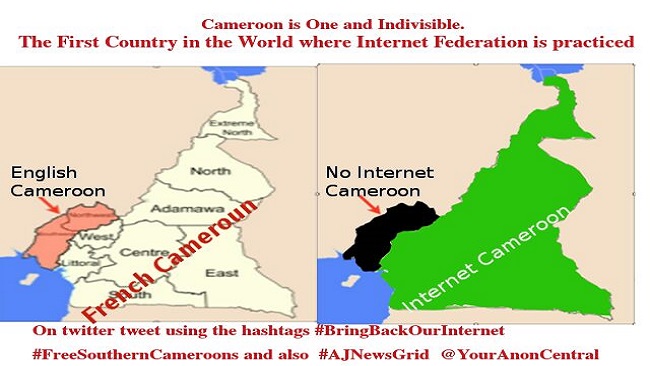
Cameroon Supreme Court’s Chief Justice Daniel Mekobe Sone on Thursday expressed dissatisfaction with “rampant misuse” of social media in the country.
“Cyber space has become an excellent platform for freedom of expression without law and faith. It has become a court where everybody is judged and condemned without recourse to courts of law. A veritable space for defamation.” Sone said in the capital, Yaounde, while opening 2019 Judicial Year.
He said Cameroonians especially in the political landscape have abused social media in defiance of the laws of the land. He stressed that the law must be applied without fear or favor.
“As much as we want freedom of expression, we must ensure that citizens act within the law,” he said.
In his traditional address to the youths on Feb. 11, President Paul Biya expressed concern that social networks have become “the source of worrying excesses” in the country and often induce people to adopt positions that are “offensive to the authorities” in violation of the law.
Xinhuanet

On February 16, 170 students, mostly girls under 18, were abducted by a group of armed separatists from a boarding school in Kumbo, in the North-West region of Cameroon. The separatists, who stormed the building in the early hours, also abducted a teacher and two guards. Everyone was released the following day amid rumours of ransoms being paid. The school remains closed.
Human Rights Watch has interviewed numerous witnesses and reviewed many images of the recent abuses in Kumbo.
The crisis in the Anglophone regions has taken a heavy toll on education. Separatists and unknown assailants have damaged, destroyed, or burnt down scores of schools and kidnapped hundreds of students across the regions.
The security situation in Kumbo is extremely volatile and the city has been in a state of crisis since September. Over the weekend, in what appears to be an act of retaliation against residents perceived as sympathetic to the separatists, security forces burnt down scores of private homes and shops across Kumbo. Destruction of private property by the Cameroonian security forces has been rife since the crisis started. Human Rights Watch has documented the burning of more than 20 villages by members of the security forces between 2017 and 2018 in both the North and South West regions.
The day after the mass abduction, soldiers looking for wounded separatists broke into the Shisong hospital and fired several shots in the air. The soldiers also threatened to kill a man in front of hospital staff. This comes as reports highlight more attacks on health facilities, including the looting of a health center in Wosing village by separatists on February 15, and the destruction of the Kumba district hospital on February 11
Kumbo remains almost completely shut down due to ongoing violence between separatists and security forces. Thousands of people have fled the area since violence escalated. Those who stayed behind have told Human Rights Watch they live in fear of the violence
Both Cameroonian authorities and the separatists should stop unlawful abuses of residents and ensure that humanitarian actors have free and unhindered access to the area to assess needs of the population and provide assistance.
Human Rights Watch
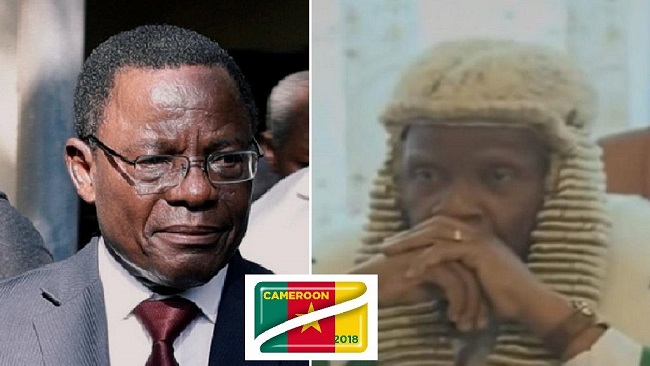
Opposition leader Maurice Kamto will today be summoned by a military court on charges which carry the death penalty, as the Cameroonian authorities intensify their post-election crackdown on critics, Amnesty International said today.
Kamto, the president of the Cameroon Renaissance Movement (Mouvement pour la Renaissance du Cameroun-MRC) is the first of a group of 131 people arbitrarily arrested last month and charged by the military court with rebellion, hostility against the homeland, incitement to insurrection, offence against the president of the republic, and destruction of public buildings and goods, to be summoned by an investigating judge. They all face the death penalty which is the ultimate cruel, inhuman and degrading punishment and a violation of the right to life.
It is horrifying that the Cameroonian authorities are considering sentencing Maurice Kamto to death simply for daring to participate in a peaceful protest. He is one of many people who have been caught up in a wave of mass arrests as authorities attempt to silence their critics. Marie-Evelyne Petrus Barry, Amnesty International’s West and Central Africa regional director
“As well as having their rights to freedom of expression and peaceful assembly crushed, many of Cameroon’s opposition members are now facing unfair trials by military courts. We are calling on authorities to end this ruthless assault on dissenting voices. Civilians should not be tried by military courts and should not face the death penalty for exercising their human rights.”
International and regional human rights bodies including the African Commission on Human and Peoples’ Rights consider that military courts should not, in any circumstances whatsoever, have jurisdiction over civilians. This is also recognized in the Principles of fair trial in Africa.
Following his arrest on 28 January, Maurice Kamto, who was also a presidential candidate, spent two weeks in detention, during which time his lawyers and family saw him only once. He is detained at Yaoundé Principale Prison along with six MRC supporters and officials. The rest of the 131 are detained in a different prison. Amnesty International considers that they should have never been arrested in the first place.
On 19th February, 12 of another group of 15 opposition members arrested on 26 January in Yaoundé appeared before an ordinary court. According to the prosecutor they had been arrested for attempting to participate in a banned demonstration. The hearing was postponed until 25 February.
“Authorities should stop being less and less tolerant of criticism and take concrete actions to promote human rights,” said Marie-Evelyne Petrus Barry.
Amnesty International