
Ambazonia Crisis: African Bar Association demands international mediation
Ten years after protests by lawyers and teachers in Cameroon’s English-speaking regions erupted into a prolonged political and armed conflict, the African Bar Association (AFBA) has called for internationally mandated mediation, accountability for human rights violations and a comprehensive transitional justice mechanism to address the crisis in the North-West and South-West regions.
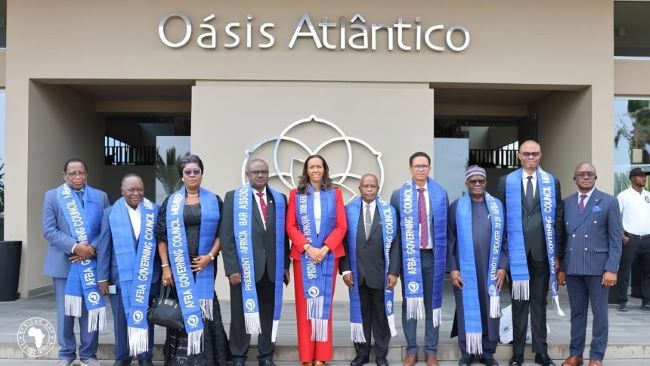
The demands are contained in resolutions adopted at the association’s 2026 Annual Conference, held from September 20 to 24 at the Oasis Atlantico Hotel Belorizonte on the island of Sal, Cabo Verde. The resolutions, now made available in the conference communiqué forwarded to Cabo Verde’s Acting President, Janira Hopffer Almada, under a letter dated October 7, address several human rights and security challenges across Africa, with Cameroon’s Anglophone crisis receiving specific attention.
The conference brought together lawyers, judicial officials, government representatives, security experts and civil society organisations from across Africa and beyond. It was led by African Bar Association President High Chief Ibrahim Eddy Mark, with former United Nations Under-Secretary-General Professor Ibrahim Agboola Gambari delivering the keynote address on constitutional governance, security, the rule of law and sustainable development.
Strong Condemnation of Violence in English-Speaking Cameroon
In Resolution 45, the African Bar Association stated that it:
“Strongly condemns the ongoing violence in the North-West and South-West regions of Cameroon, including extrajudicial killings, arbitrary arrests and detentions, torture and ill-treatment, sexual and gender-based violence, attacks on schools, students, and aid workers, and the killing of civilians by both government forces and armed separatists.”
The resolution is significant for its explicit condemnation of violations attributed to both sides of the conflict. It places responsibility for protecting civilians on all parties and identifies abuses against students, humanitarian workers and vulnerable communities among the issues requiring urgent attention.
The intervention comes as Cameroon marks ten years since demonstrations by English-speaking lawyers in October 2016, followed by protests involving teachers, brought longstanding grievances over the country’s legal, educational and political systems into the national spotlight. The protests initially centred on concerns about the increasing use of French in Anglophone courts and schools, but the government’s response and subsequent political developments contributed to a wider confrontation that eventually became an armed conflict.
International Mediation to Address Historical Grievances
The association went beyond condemning violence to demand a political process addressing the underlying causes of the crisis. In Resolution 46, it specifically:
“Calls for internationally mandated mediation to address the root causes of the Anglophone crisis, including historical grievances, marginalisation, and the demand for greater autonomy or federalism, in accordance with international law and human rights standards.”
The call places the constitutional and political grievances of English-speaking Cameroonians at the centre of any meaningful settlement. Questions surrounding the protection of the common law system, the status of Anglophone educational institutions, political representation and the distribution of power between the central government and the regions have remained contentious throughout the crisis.
The Cameroonian government has maintained its commitment to national unity and territorial integrity, introducing decentralisation measures and granting special status to the North-West and South-West regions. Separatist movements, however, have continued to pursue independence, while other voices have advocated federalism, greater autonomy or reforms within a united Cameroon.
By identifying these competing constitutional demands, the African Bar Association has called attention to issues that cannot be resolved through military measures alone. Its resolution does not prescribe a particular political outcome but calls for internationally mandated mediation capable of addressing the grievances that have sustained the conflict.
Transitional Justice and Reparations for Victims
Accountability for atrocities is another major demand in the association’s resolutions. In Resolution 47, the AFBA:
“Calls for the establishment of a comprehensive transitional justice mechanism to hold perpetrators of atrocity crimes accountable, provide reparations to victims, and ensure non-recurrence, with the full participation of affected communities.”
The recommendation would require a process capable of examining serious violations committed during the conflict, identifying those responsible and providing remedies for victims and survivors. It also places affected communities at the centre of any justice initiative, recognising that their participation is essential to rebuilding confidence after years of violence.
The proposed mechanism could address allegations of unlawful killings, torture, arbitrary detention, sexual violence and attacks on civilian infrastructure. The association did not specify how such a body should be constituted, but its emphasis on accountability and reparations indicates that any settlement should address the consequences of past abuses alongside measures to end ongoing hostilities.
Humanitarian Access and the Cost of a Decade of Conflict
The association also drew attention to the humanitarian consequences of the crisis, demanding unrestricted access to communities affected by violence and displacement. In Resolution 48, it:
“Calls for unimpeded humanitarian access to populations in need in the North-West and South-West regions, where more than one million persons have been internally displaced and over 3,000 civilians have lost their lives.”
The figures cited in the communiqué reflect the association’s assessment of the crisis, which has devastated communities, disrupted economic activity and left thousands of families struggling with displacement and insecurity. Schools and healthcare facilities have faced repeated disruptions, while insecurity has made access to education, medical care and livelihoods difficult in many affected areas.
The impact on education remains particularly troubling given that the conflict began partly with demands to protect the English-speaking educational system. Attacks on schools, threats against teachers and students, and prolonged interruptions to learning have deprived many children of educational opportunities, adding to concerns about the long-term consequences of the crisis.
A Decade Later, the Search for Peace Continues
The resolutions have emerged at a particularly important moment for Cameroon, where the conflict has entered its tenth year without a comprehensive political settlement. Despite previous dialogue initiatives and government measures intended to address Anglophone grievances, armed violence, insecurity and deep disagreements over the country’s political future have persisted.
The African Bar Association’s intervention carries particular weight because the crisis itself began with protests involving lawyers who were demanding respect for the common law tradition and the protection of English-speaking legal institutions. A decade later, a continental organisation representing the legal profession has placed those unresolved grievances alongside the need for accountability, humanitarian protection and international mediation.
The association’s communiqué, publicly released on October 29, also addresses conflicts in Sudan and eastern Democratic Republic of Congo, reparations, xenophobia and the independence of international justice institutions. Its resolutions on Cameroon, however, provide a distinct set of recommendations for a crisis whose political origins, humanitarian consequences and continuing violence have attracted concern well beyond the country’s borders.
For African Bar Association President High Chief Ibrahim Eddy Mark and the organisation’s leadership, the challenge will be translating the conference resolutions into sustained engagement with the Cameroonian authorities, regional institutions and other stakeholders. The association has not announced a specific mediation mission or timetable for implementing its Cameroon recommendations, but its position adds the voice of Africa’s legal profession to calls for a negotiated settlement.
As the Anglophone crisis reaches its tenth anniversary, the resolutions place three demands before the parties involved: a credible political process addressing the roots of the conflict, accountability and reparations for victims, and immediate protection for civilians. Whether these recommendations gain traction will depend on the willingness of the parties and potential mediators to move beyond longstanding positions and engage in substantive negotiations.
Source: Pan African Visions


