North Korea’s Kim Jong-un reappears in public amid health rumours
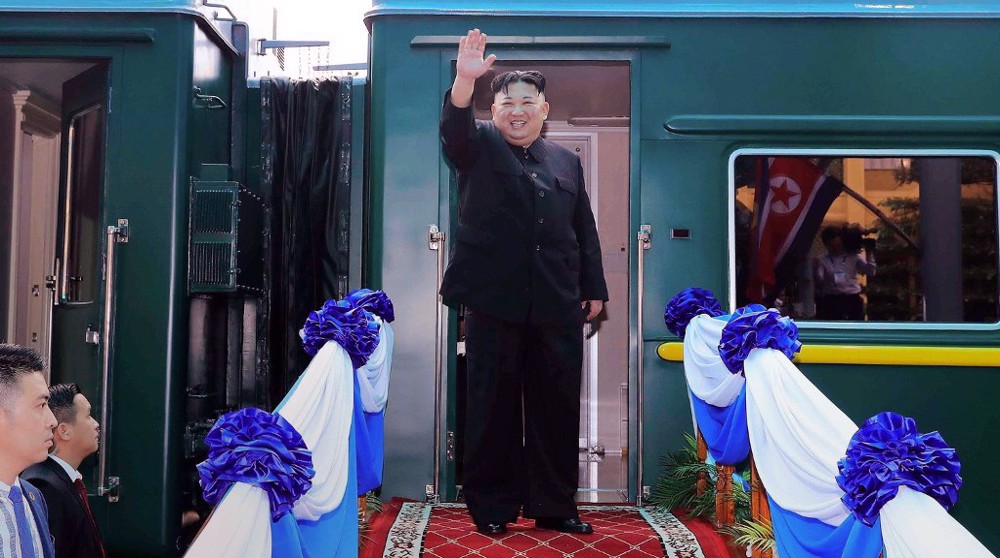
North Korean leader Kim Jong Un made his first public appearance in 20 days as he celebrated the completion of a fertilizer factory near Pyongyang, state media said Saturday, ending an absence that had triggered global rumors that he may be seriously ill.
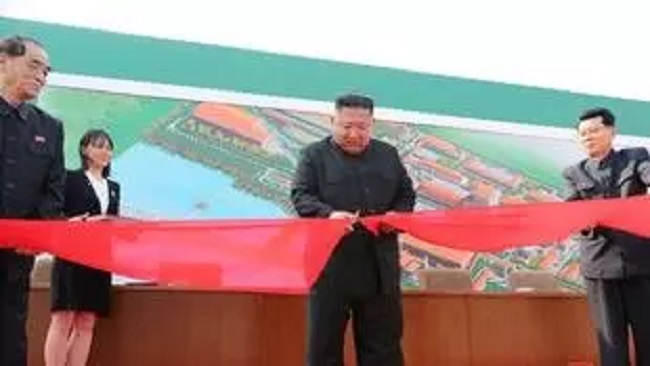
The North’s official Korean Central News Agency reported that Kim attended the ceremony Friday in Sunchon with other senior officials, including his sister Kim Yo Jong, who many analysts predict would take over if her brother is suddenly unable to rule.
State media showed videos and photos of Kim wearing a black Mao suit and constantly smiling, walking around facilities, applauding, cutting a huge red ribbon with a scissor handed by his sister, and smoking inside and outside of buildings while talking with other officials.
Seemingly thousands of workers, many of them masked, stood in lines at the massive complex, roaring in celebration and releasing balloons into the air. A sign installed on a stage where Kim sat with other senior officials read: “Sunchon Phosphatic Fertilizer Factory; Completion Ceremony; May 1, 2020.”
There were no clear signs that Kim was in discomfort. He was shown moving without a walking stick, like the one he used in 2014 when he was recovering from a presumed ankle surgery. However, he was also seen riding a green electric cart, which appeared similar to a vehicle he used in 2014.
It was Kim’s first public appearance since April 11, when he presided over a ruling Workers’ Party meeting to discuss the coronavirus and reappoint his sister as an alternate member of the powerful decision-making Political Bureau of the party’s Central Committee. That move confirmed her substantial role in the government.
Speculation about his health swirled after he missed the April 15 birthday celebration for his late grandfather Kim Il Sung, the country’s most important holiday, for the first time since taking power in 2011.
The possibility of high-level instability raised troubling questions about the future of the secretive, nuclear-armed state that has been steadily building an arsenal meant to threaten the U.S. mainland while diplomacy between Kim and President Donald Trump has stalled.
Some experts say South Korea, as well as its regional neighbors and ally Washington, must begin preparing for the possible chaos that could come if Kim is sidelined by health problems or even dies. Worst-case scenarios include North Korean refugees flooding South Korea or China or military hard-liners letting loose nuclear weapons.
“The world is largely unprepared for instability in North Korea,” said Leif-Eric Easley, a professor at Ewha University in Seoul. “Washington, Seoul and Tokyo need tighter coordination on contingency plans while international organizations need more resources and less controversy over the role of China.”
South Korea’s Unification Ministry, which deals with inter-Korean affairs, confirmed Kim’s visit to the fertilizer factory and said it was part of his efforts to emphasize economic development. The ministry called for discretion on information related to North Korea, saying that the “groundless” rumors of past weeks have caused “unnecessary confusion and cost” for South Korea’s society and financial markets.
South Korea’s government, which has a mixed record of tracking Pyongyang’s ruling elite, repeatedly downplayed speculation that Kim, believed to be 36, was in poor health following surgery.
The office of President Moon Jae-in said it detected no unusual signs in North Korea or any emergency reaction by its ruling party, military and cabinet. Seoul said it believed Kim was still managing state affairs but staying at an unspecified location outside Pyongyang.
The KCNA said workers at the fertilizer factory broke into “thunderous cheers” for Kim, who it said is guiding the nation in a struggle to build a self-reliant economy in the face of “head wind” by “hostile forces.”
The report didn’t mention any direct comment toward Washington or Seoul. Speaking to reporters at the White House, Trump declined to comment about Kim’s reappearance but said he would “have something to say about it at the appropriate time.”
Unhealthy habits
State media reported Kim was carrying out routine activities outside public view, such as sending greetings to the leaders of Syria, Cuba and South Africa and expressing gratitude to workers building tourist facilities in the coastal town of Wonsan, where some speculated he was staying.
It wasn’t immediately clear what caused Kim’s absence in past weeks. In 2014, Kim vanished from the public eye for nearly six weeks and then reappeared with a cane. South Korea’s spy agency said he had a cyst removed from his ankle.
Analysts say his health could become an increasing factor in years ahead: he’s overweight, smokes and drinks, and has a family history of heart issues.
If he’s suddenly unable to rule, some analysts said his sister would be installed as leader to continue Pyongyang’s heredity dynasty that began after World War II.
But others question whether core members of North Korea’s elite, mostly men in their 60s or 70s, would find it hard to accept a young and untested female leader who lacks military credentials. Some predict a collective leadership or violent power struggles.
Following an unusually provocative run in missile and nuclear tests in 2017, Kim used the Winter Olympics in South Korea to initiate negotiations with Washington and Seoul in 2018. That led to a surprising series of summits, including three between Kim and Trump.
But negotiations have faltered in past months over disagreements in exchanging sanctions relief and disarmament steps, which raised doubts about whether Kim would ever fully deal away an arsenal he likely sees as his strongest guarantee of survival.
Kim entered 2020 vowing to build up his nuclear stockpile and defeat sanctions through economic “self-reliance.” Some experts say the North’s self-imposed lockdown amid the coronavirus crisis could potentially hamper his ability to mobilize people for labor.
(AP)
!['I want to ask them: 'You guys, you are fighting for separation, but instead you demand money from your brothers? How will we all live together in a new country when you do this?'.' said Kelly. [Ingebjorg Karstad/NRC]](https://www.aljazeera.com/mritems/Images/2020/4/29/0beafeff0142499ca138ad4cc5e6c6e2_8.jpg)
![Heavily pregnant Alliance went into labour and gave birth to twins during the violence. 'I asked God: How could you give me twins in these times of conflict?' I did not know I could live like this, even for a week,' the 36-year-old said. She was not able to breastfeed at night with the lights on as that would be dangerous as warring parties were fighting outside. [Ingebjorg Karstad/NRC]](https://www.aljazeera.com/mritems/Images/2020/4/29/cf124669dd894d10afb9d4fc63e28269_8.jpg)
!['When we fled I managed to bring with me some mesh and hair extensions. I thought it would be useful so I could work in Bamenda as well. But when we arrived here we had nothing to protect us from the cold concrete floors, so I had to use them for my twins to sleep on. They were damaged by baby pee,' Alliance said. [Ingebjorg Karstad/NRC]](https://www.aljazeera.com/mritems/Images/2020/4/29/311e26a6ed9a489dbc4a8849a7e83b6d_8.jpg)
![The scars of war are deep in Alliance's young children. 'When my children hear gunshots, they start to cry and run inside the house and they wet themselves. I lift them up and I carry them, I tell them it will be over soon,' she said. [Ingebjorg Karstad/NRC]](https://www.aljazeera.com/mritems/Images/2020/4/29/72653b58d83147348128784b3115267a_8.jpg)
![It was May 2018 when 71-year-old Celine escaped her village with her bedridden son, her frail mother, daughter and her three grandchildren. 'On the day we fled, there were heavy clashes and people ran into the bush to hide from the shooting. I could not run with them. My son is bedridden. My mother is nearly 100 years old. I had to stay behind. The army entered our house and asked me: 'Why are you still here?'. I showed them my son and my mother.' [Ingebjorg Karstad/NRC]](https://www.aljazeera.com/mritems/Images/2020/4/29/9d28a6e8f1e044fd83dd6cadfdddb1bc_8.jpg)
![Two years ago, life changed forever for 28-year-old Alpha when the conflict reached her village of Belo and took the life of her husband. 'One day the shooting got really close and our neighbours told us to quickly lock the house and hide. We did, but men in khakis broke in and dragged my husband out of the house and took him away. My kids and I ran for our lives. The next day someone found my husband dead along the roadside and asked us to come and collect him. When we dared to go back to the house, we found it burnt down to the ground. We lost everything. All our ID cards. Everything.' [Ingebjorg Karstad/NRC]](https://www.aljazeera.com/mritems/Images/2020/4/29/6f55dcaff0dc4fe8a342337a231346e6_8.jpg)
![Family members Carine, Happiness and Larissa are making the local speciality 'puff-puffs'. The women will sell these at the local market to get some income for the full family of 15 persons. After being displaced by violence, they all share one room that they rent in Bamenda. 'They killed nine people in the market square that morning we fled. I managed to bring with me a bucket of tomatoes and crayfish that I sold the next morning to get some money. I also brought some clothes, our IDs and my family photos. The military burned down our house and my shop,' Happiness said. [Ingebjorg Karstad/NRC]](https://www.aljazeera.com/mritems/Images/2020/4/29/37470e133fca45739addb4587a405813_8.jpg)
!['Life is not going anywhere,' says Glory, 28. She fled intense fighting in Ndu in January last year with her four children, her younger brother and her husband. With the daily shootings and burning of houses, life was no longer bearable in her village. As far as she knows, their house is still among those standing, but it is too unsafe to go back. So they rent a room in Bamenda with seven family members sharing one mattress. Back in the village, Glory used to roast fish and sell it along the road. Her husband worked as a driver. With barely any income, she finds it difficult to start up a business again. Most of the money they earn goes to rent and food, and most days, they go to bed hungry. School fees are too high to be able to afford them. 'It is really very difficult here,' she said. [Ingebjorg Karstad/NRC]](https://www.aljazeera.com/mritems/Images/2020/4/29/77c83afad92b4133abdd8861c33270ea_8.jpg)
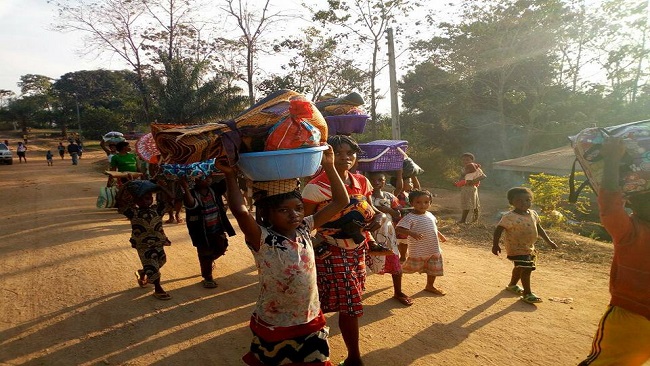
![The road leading from the small airport outside Bamenda into the city has been the site of intense fighting and the area is mostly abandoned. Burned-out cars and destroyed houses are peppered everywhere. In the two English-speaking regions, more than 250 villages have been burned down and are now fully or partially deserted. [Ingebjorg Karstad/NRC]](https://www.aljazeera.com/mritems/Images/2020/4/29/32de70c6a5e34e5eb75cb6588229f524_8.jpg)
![''The boys, sometimes they want money, sometimes they just want to kill those they suspect do not support their cause,' says Reverend Mokake in the Cameroon Baptist Convention in Bamenda. 'It has been a hard year. We lost five pastors the last years as a result of the escalation of the conflict.' [Ingebjorg Karstad/NRC]](https://www.aljazeera.com/mritems/Images/2020/4/29/c001e2e1979847ea819020b1eae6f3c8_8.jpg)