
Breaking News
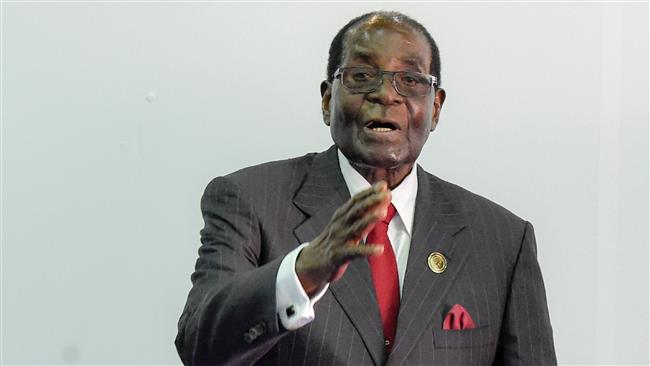
Loser takes all as Zimbabwe gives ousted Mugabe retirement package
Zimbabwe’s ousted president Robert Mugabe will get a residence, a car fleet and private air travel as part of a new government-funded retirement package for former leaders, state media reported Thursday.
Mugabe will also be entitled to at least 20 staffers including six personal security guards, all paid for from state coffers, according to details of the benefits published in The Herald newspaper.
The 93-year-old, who quit last month under popular pressure following a military takeover, is the first beneficiary of the generous measures unveiled Wednesday by new President Emmerson Mnangagwa.

No monetary details were spelt out, but the country’s constitution stipulates that an ex-president is entitled to a pension equivalent to the salary of a sitting president.
Local independent media reported last month that Mugabe was granted a $10-million (8.3-million euro) retirement bonus as part of a deal to persuade him to eventually resign. The government denied the claims.
As part of the new package, Mugabe will have three cars — a Mercedes Benz S500 Series or an equivalent class of sedan, an all-terrain station wagon and a pickup van — which will be replaced every five years.
The government will also pay for fuel.
Mugabe and his wife will be entitled to diplomatic passports. The couple can go on four first-class air or train trips within Zimbabwe and four trips abroad on a private plane.
Mugabe will also be awarded a fully-furnished official residence anywhere in the capital Harare, in addition to bills and entertainment allowances.
Health insurance for the former leader, his spouse and dependents is also included in the raft of benefits.
Mugabe resigned on November 21 after his party expelled him and parliament began proceedings to impeach him in the wake of a military intervention.
His 37-year tenure was marked by accusations of rights abuses, electoral fraud and economic ineptitude.
He was replaced by his long-time ally Mnangagwa, who had fallen out with Mugabe after the president sided with his 52-year-old wife Grace in a bitter feud.
(Source: AFP)
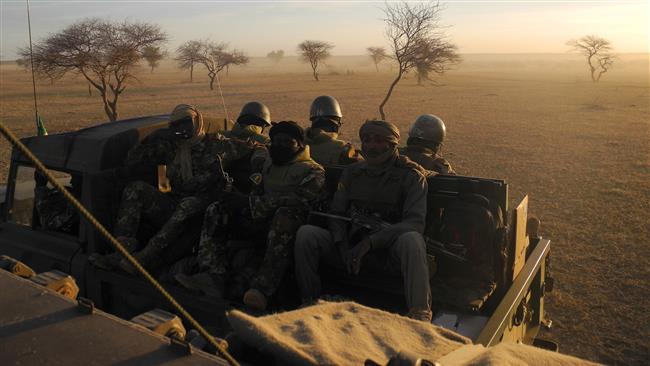
Mine blast kills 3 Malian soldiers hunting for extremists
Three soldiers were killed in central Mali on Thursday by a mine blast as they hunted for suspected extremists, the army announced in a statement.
“In their pursuit of the terrorists, the FAMa (Malian armed forces) were victims of a mine explosion,” the army said. “The incident took place… in the Bulkessy (Mopti) sector on the border with Burkina Faso.”
“The casualty toll is three dead and three wounded,” added the statement, without giving any further details.
On December 21, the army in the large northwest African nation, mostly desert, announced the killing of five armed extremists and the death of a soldier when troops fought off an attack near Niono in the center.

In March and April 2012, extremist groups linked to al-Qaeda seized control of the arid north of Mali, including celebrated ancient cities such as Gao and Timbuktu, centers of trans-Saharan trade and learning.
The extremists were largely driven out in a French-led military operation launched in January 2013, but large tracts of the country are still not controlled by Malian or French forces, nor a UN peacekeeping mission.
These forces regularly come under attack despite the signature in mid-2015 of a peace pact intended to isolate armed extremists.
Since then, the attacks have spread southwards in Mali and violence has also struck in neighboring Burkina Faso and Niger.
Faced with deteriorating regional security, the G5 Sahel regional organization, which includes the three nations together with Chad and Mauritania, revived plans for a joint anti-extremist force, initially launched in November 2015 with French support.
(Source: AFP)
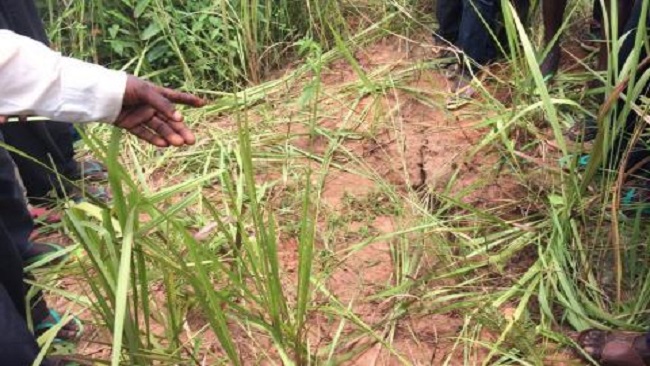
Anglophone Crisis: 2 mass graves with dozens of bodies found in Mamfe
Two mass graves containing dozens of bodies have been found in Mamfe, a local human rights activist hinted Cameroon Concord News today Thursday the 28th of December 2017, adding they appeared to belong to people who had been killed by Cameroon government forces operating in Manyu Division ever since President declared war against the people of Southern Cameroons.
The mass graves were discovered behind the old council office in Mamfe, the chief town in the Manyu constituency. Our Manyu Bureau Chief reported that one of them contained 10 bodies belonging to young people from Eshobi, Egbekaw, Besongabang and Dadi including five other villages.
They had been forced out of the Mamfe prison immediately after the attack on the gendarmerie post in Egbekaw by Cameroon government troops, according to a local human rights activist. The number and identity of the bodies in the other mass grave was not yet known. A Mamfe Rural Council Official who spoke to us but sued for anonymity confirmed that two mass graves had been found, but declined to give more details.
Passersby found the mass graves after noticing a smell and insects there, the Council officer said. The victims belong to the Manyu ethnic group which the Yaounde regime accuses of supporting the Interim Government of the Federal Republic of Ambazonia.
Dozens of armed Southern Cameroons militants have remained active in Manyu confronting the Francophone dominated army.
Source: Cameroon Concord News
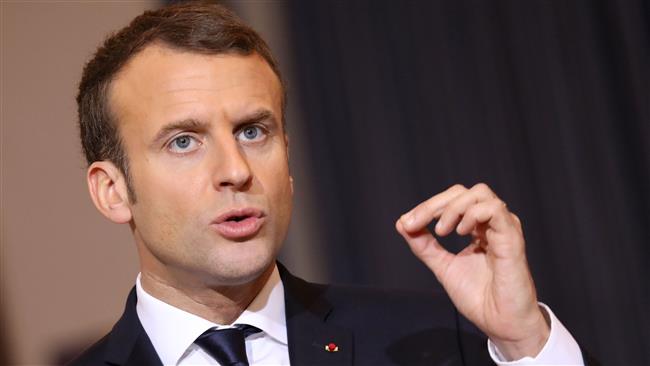
President Macron asks Saudi king to lift Yemen blockade
French President Emanuel Macron has reportedly asked King Salman of Saudi Arabia to remove a long-running blockade on Yemen and let humanitarian aid through, as millions of Yemeni civilians struggle with the humanitarian crisis caused by an ongoing Saudi military invasion.
The Saudi-led war, which began in March 2015, was one of the main issues Macron discussed with the Saudi monarch over the phone on Wednesday, an Elysee source told Reuters.
“The president expressed his strong concerns about the humanitarian catastrophe in Yemen and called on the Saudi king to lift completely the blockade to allow humanitarian aid and commercial goods to enter Yemen,” the source said.
The constant bombing by Saudi Arabia and its regional allies, including the United Arab Emirates, has destroyed much of Yemen’s infrastructure, leaving it grappling with what the UN calls “the worst humanitarian crisis on the planet.”
The military campaign has killed at least 13,600 people while an ensuing cholera outbreak has killed more than 2,000 others. According to the UN, the war has put seven million Yemenis on the verge of starvation.

Despite international outcry, Riyadh has imposed a tight blockade on all major Yemeni air, land and sea ports since early November.
Human rights and charity groups have warned that the blockade is rapidly deteriorating life conditions in Yemen by contributing to a severe shortage of food and medical supplies.
Mark Lowcock, the UN undersecretary-general for humanitarian affairs, has warned that “the largest famine the world has seen for many decades, with millions of victims,” awaits Yemen, unless the Saudi-led coalition ends the blockade.
French double-standards
Macron’s alleged call on King Salman raises questions about Paris’ double-standard policy on the war, as French weapons manufacturers keep supplying Saudi Arabia and its allies with more weapons.
According to the Control Arms Coalition, France, the world’s fourth weapons exporter, authorized arms licenses worth $18 billion to Saudi Arabia in 2015, nearly two times more than the United States ($5.9 billion) and Britain ($4 billion) combined.

Besides France and the UK, Germany and Greece are two other members of the European Union that have struck major arms deals with Saudi Arabia during the war.
In late November, the European Parliament overwhelmingly voted in favor of a non-binding resolution that urged the bloc to slap an arms embargo on Saudi Arabia.
Culled from Presstv
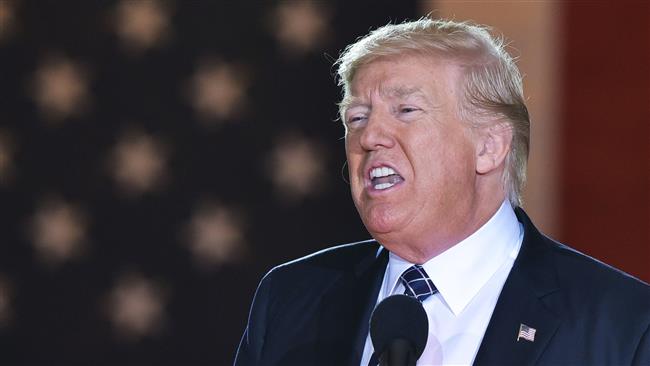
A Digital army building up against US President Donald Trump
A billionaire Democratic donor has built a growing army of grass-roots activists to call for impeachment of US President Donald Trump in a digital petition, an issue that may be part of the Democratic mainstream in the 2018 elections.
The Need To Impeach petition has so far been signed by some three million people and is tapped as a key asset in the upcoming 2018 Democratic campaigns for mid-term elections that could in part give Democrats majority in the US Congress, Politico reported Wednesday.
“That’s how you build a grass-roots operation for a presidential campaign. And if you are that guy who started this, that’s certainly a leg up in organizing a 50-state strategy,” said Mike Madrid, a Republican consultant in California who is advising former Los Angeles Mayor Antonio Villaraigosa, a Democrat, in his gubernatorial campaign. “That’s what he’s building, and it’s probably second only to Bernie Sanders’ list, and may be eclipsing it. Every election cycle has its own dynamics, and whoever is tapping into the sentiments of their own base usually has an advantage.”
“We have tapped into something much larger than we thought,’’ he said in a recent interview.
Experts say the petition could serve as a campaign goal for those running in next year’s midterms, which serve as the first nationwide referendum on Trump’s presidency.

“Donald Trump has brought us to the brink of nuclear war, obstructed justice, and taken money from foreign governments. We need to impeach this dangerous president. Sign on now,” reads the petition on its website.
Forty-one percent of Americans back Trump’s impeachment, according to a recent NBC News/Wall Street Journal poll, a higher percentage than the one supporting the billionaire in the 2020 election.
Source: Presstv
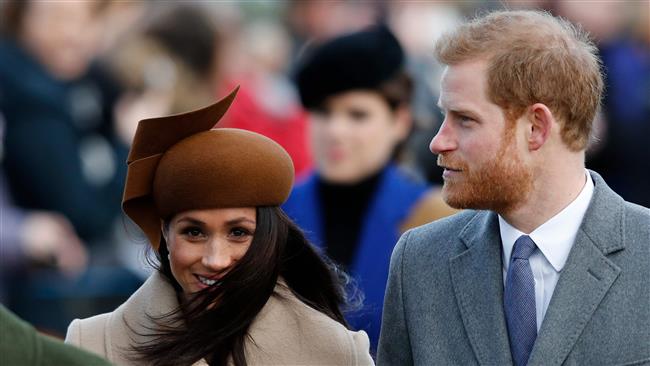
British government pleads with Prince Harry not to invite Obama to his wedding
The UK government has expressed concern over the attendance of former US President Barack Obama and his wife Michelle to Prince Harry’s wedding.
There has been speculation in the British media that the White House might take offense if Harry invites Obama, with whom he is friends with, but not US President Donald Trump.
“The 33-year-old prince has become good friends with the Obamas since bonding with them during the Invictus Games,” The Sun reported.
“There are deep fears among senior Foreign Office and No10 officials that another perceived national snub will make it impossible for [UK Prime Minister] Theresa May to meaningfully engage with Trump,” the newspaper said.

Trump told May he would not visit London for his controversial state visit until he is guaranteed a “better reception” amid fears of popular protests.
“When I know I’m going to get a better reception,” the president said in June, “I’ll come and not before.”
Trump, was due to visit the UK in 2018, but a date is yet to be confirmed. The working visit, which would not involve meeting Queen Elizabeth, would likely avoid the mass protests threatened by a full-blown state visit.

May also scolded Trump in September and again in November for irresponsible tweets about Britain.
Last month, Trump provoked a wave of anger and disgust from US human rights groups and UK politicians for re-tweeting incendiary anti-Muslim videos posted by Jayda Fransen, deputy leader of the far-right group Britain First.
“Harry has made it clear he wants the Obamas at the wedding, so it’s causing a lot of nervousness,” a senior government official told The Sun.
“Trump could react very badly if the Obamas get to a Royal wedding before he has had a chance to meet the Queen.”
“If the PM lays down the law, Harry will just have to suck it up,” the source says, despite the fact the wedding is not a state occasion.
UK Labour leader Jeremy Corbyn called Trump a “threat” to the world and said he should not be allowed in to the UK because of his “reckless” policies, specifically his ill-fated visa ban against people from several Muslim countries.
Culled from Presstv
Southern Cameroons Crisis sliding into a rebellion
A secessionist push in Cameroon’s English-speaking regions is on the brink of a full-blown revolt, threatening political stability in a country ruled by one of Africa’s longest-serving leaders. Following a crackdown on independence supporters who tried to raise flags on government buildings in the central African nation’s English-speaking regions in October, at least 16 members of the security forces have been killed in attacks the government blames on the activists. This month a mob of 200 men besieged a paramilitary police station, according to the government.
It marks a dangerous turn in the crisis that began about a year ago with peaceful protests against the French language’s dominance in courtrooms and schools. Attacks on the military “presented those activists who were against armed combat before with a fait accompli — those who want to take up arms now have the upper hand,” said Hans De Marie Heungoup from the International Crisis Group. “There’s a real risk of rebellion that could make the Anglophone regions ungovernable.”
The secession issue in Cameroon echoes a global trend spanning from Iraqi Kurdistan and Catalonia in Spain, where leaders this year led thwarted drives for independence, to Africa itself. In neighboring Nigeria there are new calls for a southeastern Biafran state, 50 years after a previous attempt led to a civil war that claimed a million lives. Meanwhile, Kenya’s political opposition, smarting from an election loss they blame on rigging, have warned some regions could seek to secede.
Vital Ports
Cameroon’s English-speaking minority, about a fifth of the population, has complained of marginalization for decades and many highly educated Anglophones have moved abroad. The country, whose roads and ports are vital for landlocked neighbors such as oil-producing Chad, was split after World War I into a French-run zone and a smaller, British-controlled area.
Radical factions of the protest movement in the Northwest and Southwest regions now refer to the area as Ambazonia and discuss armed struggle on social media. About 20 percent of the population in the affected regions is estimated to support secession, according to the Brussels-based International Crisis Group.
The unrest comes as Cameroon’s army struggles to halt a spate of bombings and raids by the Islamist militant organization Boko Haram near the northern border with Nigeria. While Boko Haram forced thousands of Cameroonians to flee their homes last year, the secession campaign poses a much bigger threat to the government, Heungoup said by phone from Nairobi, Kenya’s capital.
“Even if Boko Haram killed a lot of people, it was clear from the onset that they would never threaten or capture the state,” he said. “But the Anglophone crisis calls the foundations of the Cameroonian state into question.”
Heavy-handed Response
President Paul Biya, who calls the secessionists criminals, is seeking to extend his 35-year rule in elections next year. Biya is the continent’s second-longest serving head of state, after Teodoro Obiang of neighboring Equatorial Guinea. Robert Mugabe, who ruled Zimbabwe since 1980, resigned in November.
Ambazonia now has a self-proclaimed president, a flag and an official government website. Commonwealth Secretary-General Patricia Scotland spent five days in Cameroon this month in an attempt to defuse the crisis.
“When this crisis was in its beginning stages, the government thought it could kill a few protesters, arrest others and heavily militarize the North West and South regions for the crisis to be over,” said Shadrack Mbiwang, an activist who claims to be a member of the Ambazonia army. “This time around, we are ready to fight and fight till the restoration of our statehood.”
Culled from Bloomberg.com
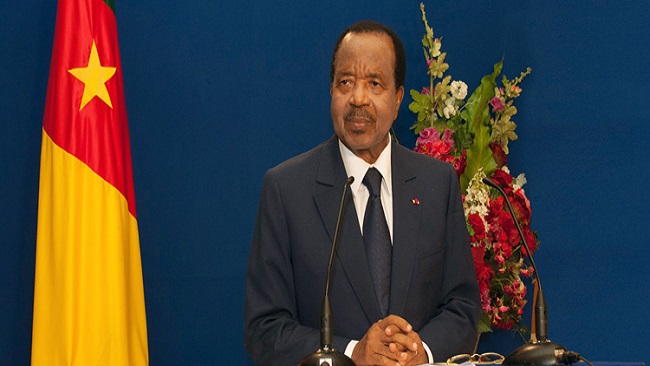
Biya’s end-of-year speech may not bear the message many may want to hear
With the year coming to an end, many Cameroonians are impatiently looking forward to the traditional end-of-year speech as they believe it could bear a special message of hope. The country has been wrapped up in conflict for over a year. There have been calls for inclusive dialogue, but the calls seem to have been falling on deaf ears as government extremists have opted for oppression and repression as the ideal tools for conflict resolution.
For more than a year, not even the country’s leader has addressed the nation. Many had hoped that in the face of such an escalating situation, the country’s authorities will instead tilt toward a strategy of winning hearts and minds, but their hard rethoric has always been accompanied by violent military action that has only made matters worse.
According to the International Crisis Group, more than sixty civilians have been killed, at least sixty government troops have also been killed and an indeterminate number of secessionist fighters have been sent to an early grave.
These statistics do not seem to convince the government that dialogue is the ideal way to stabilize the country. The Hawks in the regime are still beating their war drums even when the writing on the wall is visible and clearly indicates that the way forward must go through a negotiating table.
Though there are calls for inclusive dialogue, it must be acknowledged that it will be hard having the government and separatists around the same table. The anger is deep and the grievances are many and complex.
However, all hopes are not lost. While the above-mentioned groups could be diametrically opposed to each other and are even against dialogue, as their definitions of dialogue are different, there are third parties that have clearly indicated their willingness to act as mediators.
This is a conflict that will never have a clear winner. Even the government with its regular military has come to realize that declaring a war does not imply winning it. The numerous setbacks government troops have faced in Manyu Division clearly indicate that whenever there is war, the casualties will not only be on one side.
More than sixty army soldiers have been sent to an early grave and many more corpses are being picked up around the thick Manyu equatorial jungle. These lives could have been spared if dialogue had been engaged right from the beginning.
Yesterday, nine new military corpses were registered at the Mamfe Divisional mortuary and many more soldiers have been declared missing, with scores deserting for fear of death.
A young Manyu soldier’s corpse was taken to Limbe yesterday where his family lives. Though an Anglophone, he was killed by his own brothers in the jungle. He was considered an enemy just for wearing the military fatigue. A reminder that there are no brothers or sisters in situations of war.
Military authorities are clearly not giving a true picture of military casualties. Manyu Division has been a grave yard to these young and inexperience soldiers who do not understand the Manyu jungle.
This unfortunate situation should advise the government that it must pursue genuine and inclusive dialogue relentlessly. It is in the interest of all Cameroonians to work hard to ensure the government and Anglophones meet at the negotiating table to work out their differences.
But will this happen anytime soon? The end-of-year speech will be an occasion for the government to clearly articulate a message of hope and peace. Tricks have failed. Attrition has not worked. War has brought more pain and sorrows to both Anglophones and Francophones. A new strategy must be given a chance and that strategy must be predicated on peace.
However, in order not to be very disappointed, it’s better to expect nothing new. Cameroonians have seen lots of things go wrong in their country. The Anglophone crisis offers a clear manual on how a crisis should not be managed. The end-of-year speech may not bear the message many may want to hear. Expect less and the disappointment will be less.
By Dr. Joachim Arrey
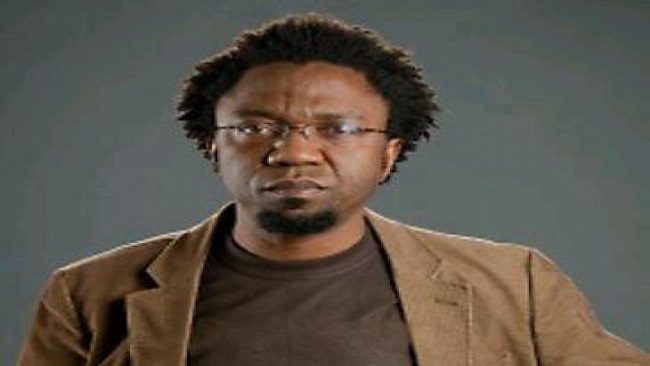
La Republique frees US professor held for criticizing Biya regime
A New York literature professor held in the Central African nation of Cameroon since early this month for criticizing the government was released Wednesday, his lawyer said.
Dual U.S. and Cameroonian citizen Patrice Nganang waited to be expelled to an unknown destination, lawyer Emmanuel Simh said, adding that the professor has been told not to return.
Nganang, a professor at New York’s Stony Brook University, had faced a Jan. 19 hearing after being detained Dec. 7 while trying to leave his native country. The court in Yaounde early Wednesday announced he was released and that all charges were dropped.
The charges against him included issuing a death threat; insulting constitutional bodies, specifically the military; and inciting violence in a Facebook post, according to supporters including the New York-based Committee to Protect Journalists. “We can only be very happy, when we have an unlawfully and arbitrarily detained client, to see him released,” Simh said.
Last week, a military appeals court in Cameroon acquitted and freed Ahmed Abba, a correspondent for Radio France International’s Hausa service, who had been sentenced to 10 years in prison for not denouncing acts of terrorism and laundering proceeds of terrorist acts. Cameroon had faced international pressure over his conviction.
Culled from the Seattle Times