
Prominent Southern Cameroons lawyer Sama Francis dies
Former Chairman of the General Council of the Bar Association, Barrister Sama Francis has died after a short illness. This item is still developing
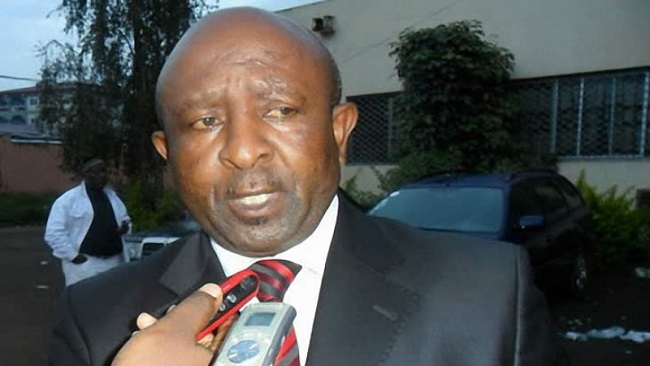
Former Chairman of the General Council of the Bar Association, Barrister Sama Francis has died after a short illness. This item is still developing
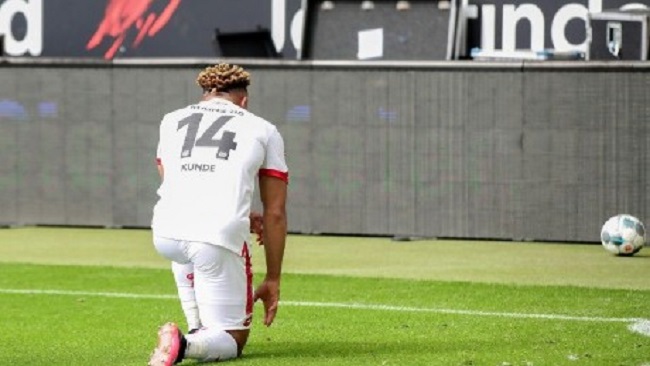
Pierre Kunde Malong on Saturday became the latest Bundesliga player to pay tribute to George Floyd when he took a knee after scoring the second goal in Mainz’s 2-0 win at Eintracht Frankfurt.
As thousands assembled in Berlin and Munich to demonstrate against police brutality and for racial equality, Mainz midfielder Kunde Malong paid tribute to Floyd, a black American man who died in Minneapolis last month while being arrested by police officers.
The Cameroonian will face no sanction from the German Football Federation (DFB) for the gesture after it gave the green light on Wednesday to players who wanted to honour Floyd or support the Black Lives Matter protests which have raged across the USA.
Borussia Dortmund players also wore messages on their T-shirts during their pre-match warm-up ahead of their clash with Hertha Berlin later on Saturday.
Jadon Sancho and Achraf Hakimi wore the messages “no justice, no peace”, while midfielders Axel Witsel and Emre Can’s T-shirts displayed the words “black”, “white” and “yellow” crossed out, with the word “human” below.
Sancho and Hakimi had avoided punishment by the DFB following their on-pitch calls for justice for Floyd last week, as German football’s governing body gave players the go-ahead to show their feelings regarding Floyd’s death and the subsequent protests.
Earlier, German champions Bayern Munich became the highest-profile club in the country to show their support the protests.
Prior to their 4-2 win at Bayer Leverkusen, players warmed up in T-shirts bearing both the Black Lives Matter hashtag and the slogan of the club’s official “Reds Against Racism” campaign.
“As players, we always have the same message: we are tolerant, we are open, we are open to the world,” Bayern captain Manuel Neuer told Sky after the game.
During the game, all Bayern players also wore black armbands bearing the words “Black Lives Matter”.
“FC Bayern stands for a world in which racism, discrimination, hate, injustice and violence have no place. The death of George Floyd and the images from the USA have shocked us all,” said club president Herbert Hainer in a statement.
“It’s a matter of actively and loudly showing our colours. Black Lives Matter and Reds Against Racism. We stand for togetherness that goes far beyond sports.”
Source: AFP
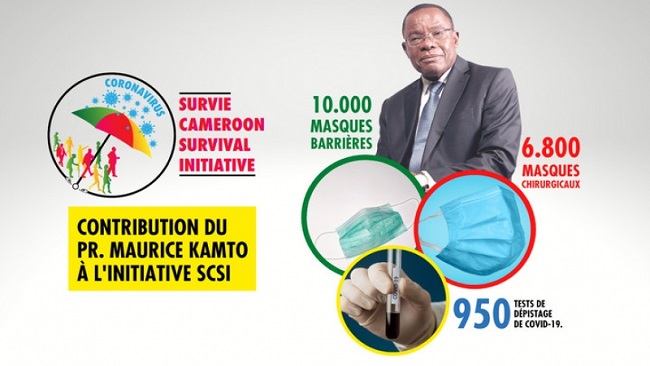
As Cameroon eases coronavirus restrictions, the government is accused of politicising the pandemic.
Government leaders in Cameroon have been accused of being more interested in fighting the opposition than COVID-19.
Despite accusations of putting the population in harm’s way, the government has reopened airports and schools.
Cameroon has one of Africa’s highest infection rates with more than 200 people reported dead and 6,000 cases.
Written by aljazeera
Journalist Njoka Kingsley is missing presumed detained. He’s one of many for whom the Southern Cameroons crisis has led to a political awakening and a demand for free speech. Cameroon Intelligence Report sources in Yaoundé have confirmed that Njoka is in Yaounde undergoing torture.
Now the question arises: where is disappeared journalist Njoka Kingsley Fomonyuy, “taken into custody by plainclothes security officers on May 16, 2020 remains a mystery. Sources familiar with the incident say he was taken from his house in Douala by armed men who only identified themselves as ‘Surete National’.
He’s from Kumbo, Bui Division in the North West Region. He studied Journalism and Mass Communication in the University of Zaria in Nigeria, from where he graduated with a Bachelor’s degree in 1990.
In Cameroon, the freelance journalist worked with Magic FM and as a senior writer for Popular Catholic biweekly Magazine “L’Effort Camerounais” in Douala. Before whisking Njoka Kingsley away, the armed men ransacked his house apparently searching for possible evidence that could implicate him. Without finding what they were after, the armed men asked Njoka’s wife to hand his office keys and his identification documents to them. They took an HP laptop from Njoka’s house and then headed to his office which they equally searched thoroughly making away with two laptops marked Lenovo and DELL as well as the sum of over FCFA 50,000.
The unidentified men gave no reason for taking Njoka Kingsley into custody. They also did not say where he was being taken to. It has now been 21 days since he was “kidnapped” without any crime committed and without even being charged. With the recent declaration of Samuel Wazizi’s death in the hands of the forces of law in Yaoundé, one is tempted to think that anything can happen to Njoka Kingsley Fomonyuy if nothing is done.”
Reported by Inner City Press and Cameroon Intelligence Report
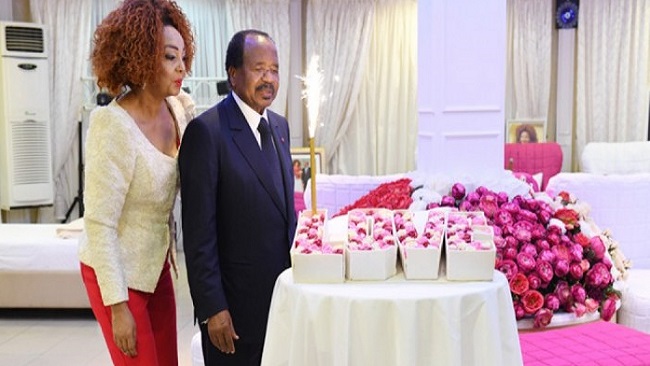
As Cameroon witnesses the dying embers of the embattled Biya regime, questions abound about what the future holds for the Central African country. Beset by a violent separatist conflict in the Anglophone regions and the omnipresent scourge, Boko Haram, in the North, that Cameroon faces significant challenges ahead is an understatement. Yet slowly and very carefully, the potential for a more democratic future is emerging from conversations between leading Cameroonians.
President Paul Biya has effectively ruled Cameroon since 1982, with questionable elections returning him as President as recently as 2018. Biya, now a sprightly 87, will be a venerable 92 when his seventh term ends, and his health remains a popular topic amongst Cameroonians both at home and in the diaspora. Extended stays in Geneva and regular disappearances from the public eye have only furthered these discussions. Biya’s absence was particularly conspicuous this year at the start of the Coronavirus pandemic- even his reappearance at a meeting with French Ambassador Christophe Guilhou did little to stop them. Biya is apparently back at the helm now, but questions about his health abound. There is now a growing inevitability about the end of the Biya regime. Nobody lives forever, and Cameroonian eyes are starting to turn toward the future. Who will succeed Biya? What does the Cameroon of the future look like? More simply- what comes next?
Whilst Biya’s Cameroon Peoples Democratic Movement (CPDM) party may retain an overwhelming majority (139/180 seats) in the National Assembly, there is a degree of inescapability about the instability and potential power vacuum to come. This is the price any highly centralized country must pay for being ruled by a strongman with an iron fist for so long. Out of this change, however, arises an opportunity never truly granted the people of Cameroon since its formation in 1960, as the only previous president, Ahidjo, was also widely regarded to be dictatorial figure. It is remarkable that since 1960, Cameroon has had just two presidents. After sixty years of the rule of the Strongman and ultimately the cult of Biya, the people of Cameroon are approaching the greatest crossroads since federation in 1972, or perhaps in the country’s history. The people of Cameroon can allow the nation to continue down its current path, settling on a new ‘chosen’ leader in the mold of Biya, but they will also have the chance to effect the lasting political change that many desire. Leader of the Cameroon Renaissance Movement opposition party, Maurice Kamto, is the most prominent proponent of this view, publicly opposing an apparent transfer of power to one of Biya’s acolytes, as if the CPDM party itself had the divine right to rule.
On social media, he stated ‘We will not accept the mutual agreement succession in our country, nor new popular elections without consensual reform of the electoral system. Only the Cameroonian people will have to choose their legitimate leaders, in freedom and democratic transparency’. Kamto has paid and continues to pay the price for his opposition to the regime. He and his supporters were imprisoned from January to October 2019 in the notorious Kondengui Prison in Yaoundé. A rumored assassination attempt followed, and only this week was his compound attacked and death threats reportedly made against him. He recently also proposed a wide-ranging, representative committee to help resolve the Anglophone Crisis. It is somewhat symptomatic of the Biya regime’s extremities and decline that Kamto’s efforts to fundraise for the Coronavirus response were heavily suppressed- and even outlawed- by the government.
Yet whilst Kamto is indeed a key player, a drive for change is coming from some of Cameroon’s most revered figures. Politician and entrepreneur Kah Walla’s ‘20th of May Dialogues’, livestreamed simultaneously on Twitter [CS1] and Zoom, has brought some of the nation’s brightest minds together to discuss the future of their country. Speakers including journalist Mimi Mefo, once imprisoned by the Biya regime, the indomitable technology entrepreneur Rebecca Enonchong, surgeon Dr. Dennis Foretia and others have all voiced their thoughts on issues including the Anglophone Crisis, Coronavirus and political transitions. The value of these dialogues should not be underestimated, as they are introducing and highlighting new, exciting Cameroonian options for the country’s future, from some of the nation’s finest minds. The reaction to these dialogues on social media illustrates both the richness of Cameroon’s political sphere and the yearning for change- or at the very least, more discussions.
Although the Anglophone Crisis is oft ignored by the international community, it threatens the stability of the entire state of Cameroon and thus must form (and has formed) a key part of these discussions. The dialogues have hinted at how a solution to the Anglophone Crisis could be found, but longer-term thinking is required in order to produce a lasting peace – be it through a true federation or another mechanism. A weakness of previous dialogue efforts has been a lack of unity among Anglophone groups, with views varying widely. With a stronger coalition of Anglophone voices, a meaningful dialogue has more chance of success. The concept of a future Cameroonian state beyond the Biya regime offers a genuine opportunity for change, and for Cameroon to better reflect the demands of the Anglophone population. Of course, this will not satisfy everybody, particularly the most ardent Ambazonian separatists, but it would represent a significant improvement on the current situation. The Anglophone regions remain of vital economic importance to Cameroon, and so they would invariably be a major point of discussion, even if the crisis had never occurred.
Looking across Central and Francophone Africa, change is coming. Even Burundi’s Nkurunziza has handed power over to a successor, and more nations are supportive of Presidential term limits. France’s controversial and neocolonial CFA Franc is being replaced in West Africa by an exciting though arguably imperfect successor, the ECO. Central Africa’s CFA Franc, used in Cameroon, will surely follow, reducing the country’s dependency on its former colonial master. Coronavirus itself has also upset the world order, and what that fully means for Cameroon and Central Africa remains to be fully understood. The end of the Biya regime, then, may coincide with a changing of the guard on multiple fronts.
Whilst the Biya regime will invariably trundle on for a while to come, it feels more finite than ever before. Cameroonians have the rarest of opportunities to reform their state and to mold it to be ready for the next 100 years. That process starts with conversations like the ‘May 20th Dialogues’, led by so many brilliant Cameroonians. This progress will likely be contested fiercely by those in power by way of the Biya regime, and so there are tough political challenges ahead. Somehow though, in the unlikeliest of times amidst a terrible pandemic, there is an indelible source of hope in Cameroon.
Culled from Anglophone crisis.org
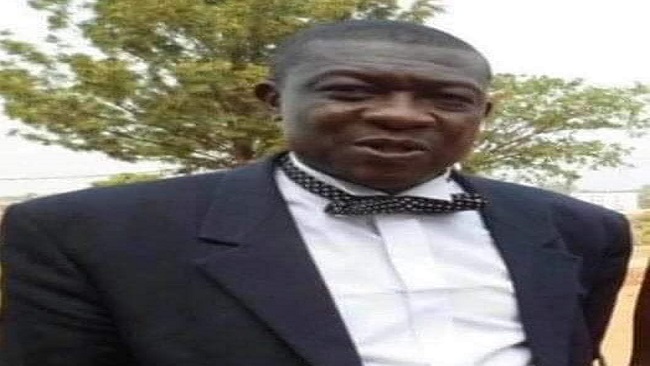
Interim Government of Ambazonia Statement on the abduction of KINGSLEY NJOKA
Fellow Ambazonians,
Accept revolutionary greetings from the Interim Government of Ambazonia.
Last week, as a people we brought pressure to bear on the French Cameroun regime regarding the disappearance and subsequent murder of Samuel Wazizi, a Southern Cameroons journalist.
Last night, the Interim Government of Ambazonia was alerted by the Press and briefed by Ambazonia security services that Kingsley Njoka, a Southern Cameroons freelance journalist was abducted by armed men on the 15th of May 2020 from his residence in Bonaberi, Douala, French Cameroun.
As matter of national emergency, this morning I communicated with our team of legal representatives in Ambazonia and French Cameroun. Their task is to ascertain without delay his whereabouts. Every Ambazonian life matters and as a government, the safety and security of our people is our foremost concern.
Samuel Wazizi was abducted, tortured and murdered for doing his job of enlightening the world about the crimes of the French Cameroun regime. Kingsley Njoka has been kidnapped for the same reasons.
We face an enemy that is brutal and has no respect for human rights and international law. An enemy that puts no value on life!
The Interim Government of Ambazonia has today notified all international media organizations about the disappearance of Kingsley Njoka.
The Interim Government of Ambazonia has through its legal team informed the regime in Yaoundé that it has until midnight Monday the 8th of June 2020 to make public whereabouts of Kingsley Njoka. If the regime in Yaoundé fails to comply with this request, they will face severe consequences.
The Interim Government of Ambazonia will make regular updates on this matter as we gather the facts from our legal team.
Thank You,
God Bless you
Dabney Yerima
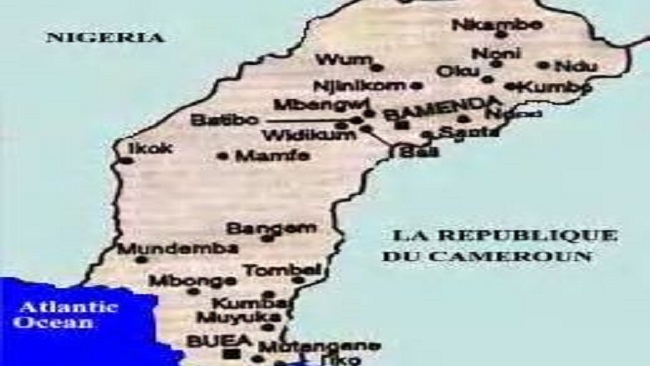
An imminent UNO State of Cameroon is fiction, both Nigeria’s Ministry of Foreign Affairs and the United Nations Office in Nigeria said on Friday.
A Nigerian newspaper had reported the imminent birth of a new African nation, sandwiched between Nigeria and Cameroon.
According to the false report, the new country whose name is UNO State of Cameroon would be proclaimed by the United Nations on 10 July, 2020.
The report said the fantasised new nation will incorporate 24 LGAs from Nigeria and the Anglophone regions of Cameroon.
But the AIT.Live quoting a UN source, dismissed the report as false. The UN does not create countries, the source said.
The trashed report was based on a misrepresentation of the Greentree Agreement, between Nigeria and Cameroon.
It was signed by former President Olusegun Obasanjo for Nigeria and Paul Biya for Cameroon on 12 June 2006.
The Agreement was the formal treaty which resolved the Cameroon-Nigeria border dispute over the oil and natural gas rich Bakassi peninsula.
The dispute had roots as far back as 1913, 1981, 1994, and 1996 armed clashes between Nigeria and Cameroon took place in Bakassi.
The dispute was referred to the International Court of Justice and on 10 October 2002 the ICJ ruled in favour of Cameroon.
A follow-up committee, composed of representatives from Cameroon, Nigeria, the UN, Germany, the USA, France and the UK, was created to monitor the implementation of the agreement.
On 13 August 2013 the United Nations Security Council stated that it welcomed the peaceful end two days earlier of the special transitional regime in the Bakassi Peninsula.
Source: Pmnewsnigeria
Rights groups in Cameroon have condemned increased attacks on aid workers and hospital staff in the country’s troubled western regions. The groups blame both government troops and anglophone rebels fighting to create an English-speaking state in majority French-speaking Cameroon.
Ernestine Maika, a 33-year-old nurse, has just arrived in the French-speaking town of Bafoussam. She says she was rescued by Cameroon military in the English-speaking northwestern town of Ndop after separatist fighters seized a vehicle in which she was transporting medical supplies. Maika says it was the third time she has been attacked in three weeks.
“The torment is too much, unbearable,” said Maika. “We are being killed, arrested, kidnapped. It is not fair. I just want to plead because the pain is too much. Humanitarian workers and nurses and medical staff should be allowed to do their work. I just want to plead that they be allowed to go out there and save lives.
The Cameroonian military confirmed that on Wednesday (June 3), four separatist fighters were killed in a gun battle after they attacked health workers in Ndop.
The government said attacks on health workers and humanitarian staff members have intensified since April, when it launched a $150 million plan to build 115 hospitals, 40 bridges, 400 wells and water taps, 600 kilometers of rural roads, 45 markets and 17,000 private homes destroyed by the separatists. Human Rights Watch Thursday reported renewed attacks on aid workers.
Iliaria Allegrozzi, senior central Africa researcher for the organization, says aid workers have been victims of kidnapping, killing, kidnapping, extortion and various forms of abuse. She says food and nonfood aid items have been looted or destroyed.
“These attacks do not only impact the lives and well-being of those working at the front line in very challenging conditions but also disrupt the provision of life-saving assistance and services to 2 million people depending on humanitarian assistance and over 600,000 internally displaced,” said Allegrozzi.
Allegrozzi did not immediately confirm the number of health workers attacked but blamed both separatist fighters and the military for the atrocities.
Cameroon government spokesperson Rene Emmanuel Sadi speaking on state media CRTV blamed separatists for the atrocities and said the military has remained professional.
Sadi says the crimes against aid workers are committed by separatist fighters who are determined to destroy government efforts aimed at returning peace to the restive English-speaking regions. He says the country can only count on the military to restore harmony and consolidate the achievements made so far in the peace process.
Separatists have blamed the military for the abuses on social media, but have warned humanitarian or aid workers against offering assistance in Cameroon’s English-speaking regions without obtaining what the separatists call an express authorization from their government.
The United Nations has expressed what it calls grave concern over the interruption of aid delivery to hundreds of thousands of people in need, following the escalating attacks against aid workers in Cameroon’s English-speaking regions.
The unrest has killed more than 3,000 people and displaced over 500,000 according to the United Nations. Fifty thousand others are seeking asylum in neighboring Nigeria.
Culled from VOA
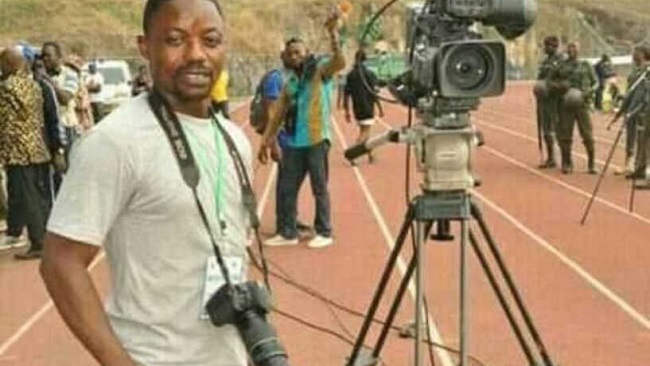
There has been massive condemnation in Cameroon after the central African state’s military bowed to pressure from rights groups and journalists Friday and issued a statement that missing Cameroonian journalist Samule Ajiekah Wazizi died in a military hospital 10 months ago. Wazizi was arrested for collaborating with separatists fighting to create an English-speaking state in the majority-French Cameroon and had not been seen in public since.
Jude Viban, the Yaoundé-based national president of the Cameroon Association of English Speaking Journalists says he is scandalized that it was only after pressure from journalists, civil society groups and the international community that Cameroon’s military finally issued a statement that journalist Samuel Wazizi had died in a Yaoundé military hospital.
“We are now calling for an independent inquiry, which will involve an autopsy, so that we can know exactly if the cause of death stated by the Ministry of Defense is exact,” Viban said. “Right now, we want to see the corpse of Samuel Wazizi.”
The military said in its statement Friday that Wazizi, who was arrested August 2 in the English-speaking southwestern town of Buea for complicity in acts of terrorism, died on August 17. The statement said when the military transferred Wazizi from Buea to Yaoundé for further investigation; he became ill and was rushed to the Yaoundé military hospital, where he died. The statement further indicates that Wazizi, while in detention and before he died, communicated with his family and had access to his lawyers, and that Wazizi’s family was informed of his death.
His lawyers and family said they never heard from him and none of them knew he died 10 months ago.
French Ambassador Christophe Guilhou says after getting conflicting reports about Wazizi’s death, he discussed the matter, which he describes as a human rights issue, with Cameroon’s president.
He says when he met with Cameroon President Paul Biya Friday (June 5), he discussed human rights concerns the French government had when it learned of Wazizi’s death and Biya promised to order immediate investigations to determine the true causes of his death.
Christopher Ndong, lawyer and rights defender said the military killed Waizizi and that investigations should be opened. He says Wazizi’s killing is just one of many committed by the military on Anglophones suspected to have links with separatists fighting to create an independent English-speaking state in French-majority Cameroon.
“In fact, it is condemnable,” Ndong said. “We have series and series of killings in Cameroon where the regime is killing and does not look accountable. They do all of that with impunity. We regret. Honestly it is not correct.”
Wazizi worked for Chillen Muzik and TV. English-speaking journalists say his arrest, torture and death and the fact that the military hid his dead body for 10 months without a statement until pressured to do so show how reporters risk their lives in Cameroon.
The military says Wazizi is in a Yaoundé mortuary but Wazizis family members and lawyers say they have not seen the body.
Source: VOA
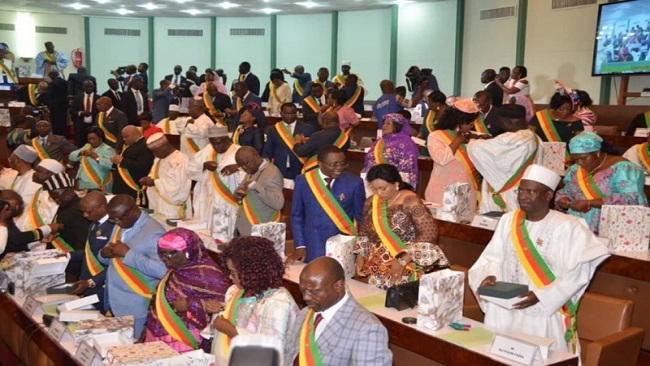
A senior CPDM Member of Parliament who is upset with the way the country’s president, Paul Biya, is running the nation has called on COVID-19 to visit Mr. Biya who is suffering from multiple health issues.
The Member of Parliament (MP), who called the Cameroon Concord News Group office in the United Kingdom yesterday, said that Mr. Biya and his collaborators had ruined the country, adding that it was time for him to quit the political scene and the planet.
The MP, who elected anonymity, regretted that COVID-19 had not been to the right places since it came to Cameroon. The senior CPDM official said it was wrong for young people to be killed by the invisible virus while those who, in their view, did not have any business on this planet were still hiding at the Unity Palace and other high places.
The MP added that Mr. Biya was the epitome of recklessness and incompetence, stressing that it would take Cameroon more than five decades to recover from the damage the Biya regime had inflicted on the country.
“Our country is going through the most trying times. The government is grossly incompetent and the captain of the boat is more concerned about his old age than about the future of a country he has ruined,” the MP said.
“I thought with the arrival of the virus on our shores, some of the human toxic waste would be swept away. The virus seems to be avoiding the real places it should have been visiting,” the Southwest MP regretted.
“What happened to the Unity Palace, the Senate and the National Assembly where some of the greatest destroyers of our country are hiding?,” the MP quipped.
“Nature is very unfair to Cameroon. Why would it let a bunch incompetent and corrupt dinosaurs to take an entire country hostage?,” the honorable member questioned.
Speaking about the Senate president, Marcel Niat Njifenji, who is currently in France battling for his life, the honorable Member of Parliament said the 86-year-old Senate President was a bag of lazy bones that was always ready to waste taxpayers’ money.
“Why is the state wasting such amounts of money to sustain a man who is, at best, a walking dead? Why would he be airlifted to France at a time when the country is looking for resources to check the spread of the Coronavirus?,” the MP asked.
The CPDM insider also advised that a combined session of the senate and parliament would soon take place to approve a government bill to be submitted for the creation of the post of vice-president in Cameroon.
The MP said he was not so sure about the new government configuration, but was prompt to add that the post of Prime Minister might disappear.
The MP warned that the constitutional amendment might not bring smiles to the faces of many Southern Cameroonians who have been fighting the government for years.
The MP also added that the president’s son, Frank Biya, might be appointed in the days ahead as many government insiders have expressed their concerns about the way things are being run.
The MP urged the Cameroon Concord News Group to use its privileged position to sensitize the world about the calamity that is slowly befalling the country.
“Why would Mr. Biya and his cohorts ever think that what happened in Togo and Gabon must happen in Cameroon? Cameroon is a different terrain and if such a primitive game had to play out in Cameroon, things could go horribly wrong,” the MP said.
“Cameroonians, the MP said, should be on the watch out. Opposition political parties must continue to be vigilant. I know my party and I understand that there is a lot of manipulation taking place within the system,” the MP said.
“As Cameroonians, we should not yield to such injustice. We must fight. I might belong to the ruling party, but I disagree with the mess that is playing out in our country. For some of us, we cannot complain. We have eaten and drunk with the devil and it will hard to say we cannot dance with the dangerous devil. We don’t have a choice, but we will continue to support efforts at ousting this evil regime from behind the scenes,” the MP concluded.
By Soter Tarh Agbaw-Ebai in London