
Biya regime receives 4th adverse audit opinion on financial statements
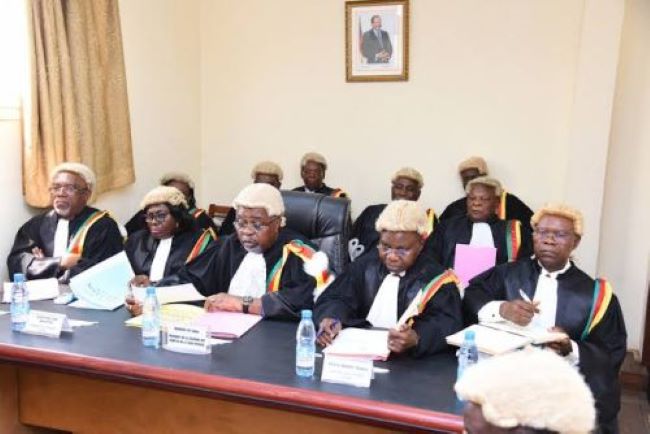
Cameroon’s efforts to improve government accounting have yet to produce financial statements that accurately reflect the state’s assets and financial position. For the fourth consecutive year, the Audit Chamber of the Supreme Court has issued an adverse opinion on the government’s accounts. Finance Minister Louis Paul Motaze disclosed the findings for the 2025 fiscal year during his presentation of the budget settlement bill to the National Assembly’s Finance and Budget Committee in November 2026.
The latest assessment follows similar findings for the 2022, 2023, and 2024 fiscal years. According to the audit report cited by Motaze before lawmakers, the financial statements “fail, in all material respects, to meet the requirements of regularity and sincerity and therefore do not present a true and fair view of the state’s assets and financial position.”
The four consecutive adverse opinions coincide with Cameroon’s transition from cash-based to accrual accounting, which began on January 1, 2022. Under the new system, government accounts are intended to provide a more comprehensive picture of public finances. In addition to recording cash receipts and payments, the state must establish the value of its assets, receivables, debts, and other financial obligations.Four years into the reform, the government still does not have a complete inventory of its assets. According to the Audit Chamber’s findings presented by Motaze, only 24 of the country’s 58 administrative divisions had completed an inventory of government tangible fixed assets in 2025, up from ten in 2024. Despite that progress, nearly 59% of the divisions remained outside the scope of the exercise.
The Audit Chamber nevertheless identified improvements over the previous fiscal year. These included the inventory and recognition of goods held by 25 central government administrations in the state’s accounts. Progress was also made in assessing financial risks arising from litigation against the government and setting aside provisions for potential liabilities, an exercise that now covers 18 administrations. The presentation of financial debt in the government’s accounts also improved.
Motaze attributed the repeated adverse audit opinions to the technical complexities of implementing the accounting reform. He pointed to similar experiences in other African and European countries, where changes to public accounting systems have also presented difficulties. “Initial government account certification exercises conducted by audit courts reveal substantial technical difficulties, with most resulting in adverse opinions or refusals to certify the accounts,” the minister said.
The government intends to continue implementing the reform in stages over several years, with adjustments based on the Audit Chamber’s recommendations. In the meantime, Motaze called on the Cameroonian public, public finance specialists, and lawmakers to exercise greater patience. Despite its adverse opinion on the financial statements, the Audit Chamber has recommended that Parliament adopt the 2025 budget settlement bill, citing improvements in the reporting of government budget execution. The recommendation concerns the implementation of the budget and does not amount to an endorsement of the accuracy or reliability of the state’s financial statements.
Source: Business in Cameroon


