
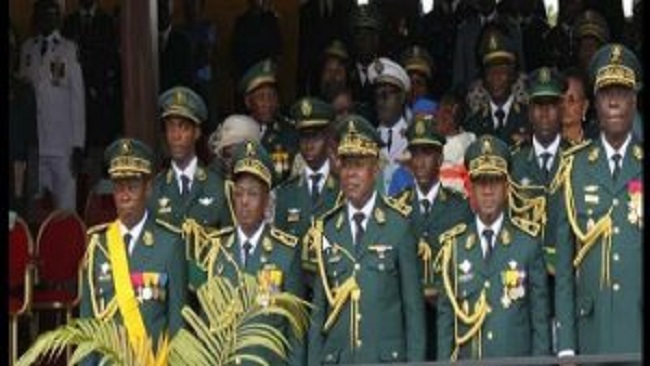
The Cameroonian army must put its conscience to the test
For more than four decades and with the full backing of the military, Cameroon has been governed under the shadow of one political system and one presidency. A nation that was once presented as a project of stability has become for millions of Cameroonians a story of stagnation, impunity and the concentration of political and economic power in the hands of a privileged few-that privileged few are members of the ruling CPDM crime syndicate and top military barons.
The time has come for the Cameroonian army leadership to ask themselves a question that can no longer be postponed: What kind of country do we want to leave to the next generation?
The governing establishment has long invoked the language of rigour and moralization. But what moralization means to an ordinary Cameroonian is very different from what it appears to mean within the corridors of power in Yaoundé.
When citizens struggle with unemployment, inadequate hospitals, failing infrastructure, poor public services and the rising cost of living while those in power and those close to power appear to accumulate extraordinary wealth and privilege, the government’s rhetoric begins to sound less like a moral standard and more like an insult.
A nation cannot be reduced to a marketplace for political insiders. The Unity Palace is not a family business. Public office is not private property. The resources of Cameroon belong to the Cameroonian people and not to a president, a political party, a network of associates or a privileged class deep within the Cameroonian army.
This is why the question facing Cameroon today is bigger than Paul Biya as an individual. It is about a political culture that has allowed power to become entrenched, accountability to become optional and citizens to become spectators in the governance of their own country.
For too long, too many Cameroonians have been told to wait! Wait for development! Wait for better institutions! Wait for opportunity! Wait for reform! Wait for tomorrow!
But a nation cannot build its future indefinitely on promises of tomorrow. The responsibility now belongs to the Cameroonian army. Not through violence. Not through vengeance. Not through hatred but through conscience, courage and a strong action like we witnessed in Gabon, Guinea, Burkina Faso and Algeria.
Every senior army officer must ask: What have I accepted that I should never have accepted? What injustice have I normalized because challenging it seemed inconvenient or dangerous? What kind of Commander-In-Chief am I willing to tolerate as a soldier? And what responsibility do I have for the Cameroon my children will inherit? These are not uncomfortable questions. They are necessary ones.
A functioning nation requires more than elections. It requires citizens who refuse to surrender their political agency. It requires institutions capable of scrutinizing those in power. It requires independent courts, a free press, transparent public finances and genuine consequences for corruption and abuse of office. Most importantly, it requires a security service including the army that understands that political power ultimately derives its legitimacy from the people. Cameroonian army soldiers should therefore put their consciences to the test.
Innocent Cameroonian citizens have died demanding transparency. Hundreds have been killed for demanding accountability. Thousands are in jail for demanding credible institutions. And thousands are living in exile for demanding an end to impunity. The Cameroonian army has been helping in stifling any political competition geared towards putting an end to the idea that Biya and his ruling CPDM party do not own the state of Cameroon. The military is now the only constituency in Cameroon that can bring about change.
The objective of the Cameroonian army should not be to replace one group of beneficiaries with another. Cameroon does not need a new generation of political predators wearing different colors. It needs a new political ethic—one in which public service actually means service to the public.
Cameroon has enormous human potential. Its young people have ideas, ambition and energy. Its entrepreneurs create businesses despite enormous obstacles. Its teachers, doctors, engineers, farmers, workers and professionals keep the country functioning despite circumstances that would break the spirit of many societies.
Cameroon does not lack capable people. It lacks a political system willing to put the interests of its people first. That can change if the military leaders sit back, think and rethink things. Change will not come from Biya and his gang. It will not come from worshipping cabinet ministers in Yaoundé. And it will not come from pretending that the status quo is sustainable simply because it has lasted for so long.
The age of political fatalism must end. The leadership of the National Police Force, the National Gendarmerie and army must now commit to the idea that government exists to serve citizens—not the other way around. The military in every nation on earth is a constituency and so as a constituency the Cameroonian army too must reclaim their right to ask difficult questions, scrutinize those who govern them and participate in getting better commander-in-chief.
The fundamental choice before all the security apparatus of the state of Cameroon is therefore not simply between one politician and another. It is between impunity and accountability. Between stagnation and renewal. Between political entitlement and public service. Between accepting the status quo and exercising the will of the Cameroonian people.
The Cameroonian military leadership should remember that history will eventually judge every generation of the men and women in uniform by what they did when they had the opportunity to change their country’s direction. General Charles De Gaulle changed France. General Franco built Spain. Cameroon is at such a moment.
Let every Cameroonian army soldier put their conscience to the test. Let them decide what kind of nation they want. And let them use every strategic means available to bring about the political renewal Cameroon desperately needs.
The country belongs to its people. It is time for its politics to reflect that truth.
To this I put my name
By Soter Tarh Agbaw-Ebai


