
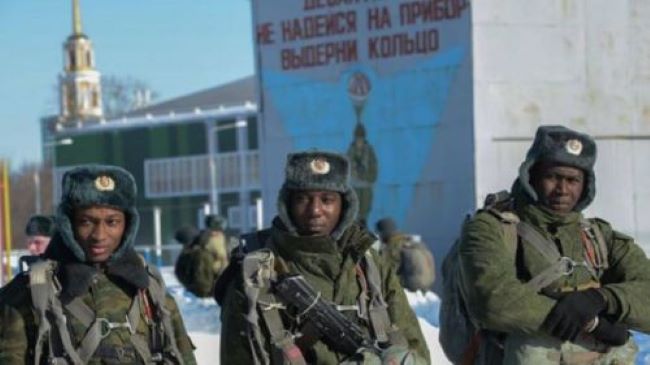
Cameroonian families seek answers over nationals recruited into Russia’s war in Ukraine
Cameroonian families are seeking answers about relatives who joined Russian forces in the war against Ukraine, with some saying they have gone months without news and others reporting that they were told of deaths without receiving clear information about the circumstances or the return of their relatives’ remains.
Civil society activists in Yaoundé have formed a group called “Ramenez Nos Fils Et Nos Frères,” or “Bring Back Our Sons and Brothers,” to document the cases and press authorities for information about Cameroonians serving with Russian forces.
In a statement sent to the media on Aug. 24, 2026, the group said it was already in contact with about 10 affected families. Some have reportedly had no contact with their relatives for several months, while others say they were informed of deaths but have received few details about what happened or how the remains would be repatriated.
The group says testimony it has collected suggests that some Cameroonians traveled to Russia following offers of employment, training or pay before eventually joining Russian forces. There is not yet enough publicly available documentation to establish the circumstances surrounding each case.
Yannick Elessa, a lawyer and co-founder of the group, said the initiative seeks to draw public attention to a troubling phenomenon that remains poorly documented. The group wants authorities to establish how the Cameroonians concerned entered the Russian military and determine whether others played a role in recruiting them.
Co-founder Paul Silver Yede said the group was already working with about 10 affected families seeking answers.
The organization also wants to prevent further departures. It is calling on Cameroonian authorities to investigate possible recruitment networks operating inside the country, assist families of missing or deceased nationals and facilitate the repatriation of remains where possible.
Russia Reported 16 Cameroonian Deaths
The initiative comes four months after Cameroonian authorities disclosed that Russia had formally reported the deaths of 16 Cameroonian nationals serving as contract soldiers.
In a diplomatic note dated March 5, 2026, the Russian Embassy in Yaoundé informed the Cameroonian government that 16 Cameroonian contract soldiers had died in what Moscow calls its “special military operation” zone.
Cameroon’s Ministry of External Relations acknowledged the notification and began efforts to locate the families of those named.
The 16 deaths are therefore the number formally reported to Yaoundé by Moscow. The figure does not establish how many Cameroonians have served in Russian forces or how many have died since the war began.
The issue escalated diplomatically on April 7, when External Relations Minister Lejeune Mbella Mbella summoned Russian Ambassador Georgy Todua.
According to the ministry, the meeting focused exclusively on the situation of Cameroonians recruited into the Russian military. Yaoundé expressed serious concern and said some of those involved had originally traveled to Russia for tourism or education before becoming involved in military operations.
Cameroonian authorities did not provide an overall estimate of the number of nationals involved or details about how they had been recruited.
The Scale of Recruitment Remains Unknown
Those unanswered questions are now at the center of the families’ campaign.
There is no consolidated public data showing how many Cameroonians have joined Russian forces, how they were recruited, how many remain deployed, or how many are missing or dead.
Russia’s recruitment of foreign nationals for the war in Ukraine has been documented in several African countries. In Cameroon’s case, the official notification of 16 deaths confirms that Cameroonian nationals have served as contract soldiers in Russian forces.
What remains unclear is how they got there, how many others followed the same path and whether organized recruitment networks have operated inside Cameroon.
Created in August, “Ramenez Nos Fils Et Nos Frères” plans to build a record of cases reported by families. Its immediate priorities are to locate Cameroonians whose relatives have lost contact with them, obtain information about those reported dead and establish how Cameroonian nationals came to fight in a war thousands of miles from home.
Source: Sbbc


