
Yaoundé: MINAT struggling to complete first census in two decades
Cameroon is stepping up efforts to complete its first nationwide population census in more than two decades, as the government races to close coverage gaps before the July 31 deadline.
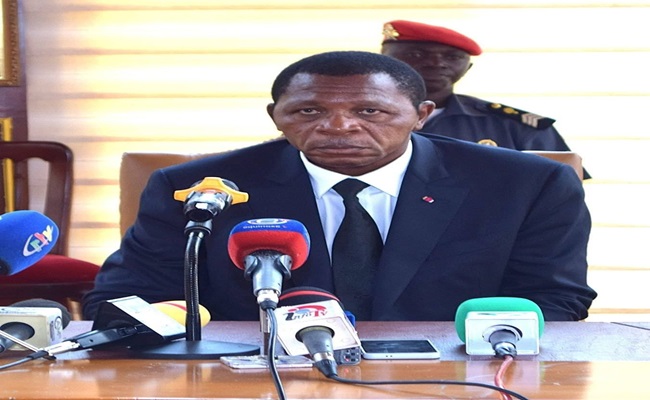
In an urgent directive dated July 17, Minister of Territorial Administration Paul Atanga Nji instructed sub-prefects, under the supervision of prefects and regional governors, to take personal responsibility for monitoring census operations in areas where progress remains slow.
The Fourth General Population and Housing Census (RGPH-4) is being conducted alongside the basic module of the General Census of Agriculture and Livestock. As the deadline approaches, the government fears that delays in some administrative districts could undermine the completeness and reliability of the data.
Local administrators have been instructed to monitor progress on a daily basis, help census workers carry out their duties and implement corrective measures in areas where coverage remains below expectations.
The directive, however, does not disclose the national coverage rate or estimate how many households have yet to be counted. The ministry’s message underscores growing concern over the pace of the operation.
Atanga Nji called on local officials to address what he described as “poor performance currently recorded in some administrative units” and to take “all emergency measures required by the current unsatisfactory situation.”
He also ordered them to mobilize traditional chiefs, political party officials, religious leaders, elected representatives, community organizations and other local stakeholders to support census teams. Those groups are expected to encourage households to participate, facilitate access for enumerators and help overcome reluctance among some residents.
The quality of the census will ultimately depend on its ability to cover the entire country, including densely populated urban areas, informal neighborhoods, remote communities and regions affected by insecurity.
The renewed push follows a meeting of the technical committee overseeing the census, which identified several obstacles slowing operations.
According to information from the committee, the main challenges include a shortage of field supervisors, weaknesses in the organization of field operations and limited public participation in some districts. The areas reportedly lagging behind include parts of the Southwest Region, the Douala III and Douala V districts, and sections of Yaoundé VI.
The committee recommended reallocating census workers more effectively, strengthening field supervision and increasing the involvement of local authorities and community leaders.
The challenges are particularly acute in major cities, where high population density, household mobility, limited access to some residences and public distrust can slow data collection.
The current deadline already reflects the difficulties encountered during the operation. Originally scheduled to end on May 29, the enumeration phase was extended to July 31 under a decree signed by Prime Minister Joseph Dion Ngute on May 29.
According to the article, the extension was accompanied by an additional CFA6 billion ($10.8 million) allocation, bringing the combined cost of the population census and the agricultural census module to about CFA19 billion, up from the CFA13 billion allocated when the operation was launched on April 24.
The additional time was intended to reinforce field teams, improve coverage in undercounted areas and enhance the quality of the data collected. As the new deadline nears, the Ministry of Territorial Administration has become one of the government’s main instruments for avoiding another extension of the census timetable.
The stakes extend well beyond completing the operation on schedule. Cameroon’s last completed population census was conducted in 2005, meaning the country’s demographic planning has relied for more than 20 years on outdated census data supplemented by statistical projections.
The results of RGPH-4 are expected to update information on the country’s population, households, housing and living conditions, providing a foundation for policies in health care, education, employment, infrastructure and decentralization.
The agricultural census module will also generate updated data on farms, livestock activities and agricultural households.
With only days remaining before the deadline, the government’s biggest challenge is no longer simply finishing the census on time. It is ensuring that areas with low coverage do not undermine the representativeness of the results and, ultimately, the quality of the public policies that will rely on them.
Source: Sbbc


