
Biya regime faces costly choice over Garoua, Maroua International Airports
Cameroon may soon have to decide whether to maintain the international status of Garoua and Maroua airports as the country prepares for the International Civil Aviation Organization’s (ICAO) aviation safety oversight audit scheduled for November 26 to December 9, 2026.
According to information obtained by Business in Cameroon, the certification process required for airports handling international flights has not yet begun for either facility. “At this stage, the certification process for some international airports, notably Garoua and Maroua, has not yet been launched,” an ICAO source told Business in Cameroon.
The same source stressed, however, that ICAO has not recommended closing either airport or removing them from Cameroon’s international airport network. “ICAO has recommended neither the closure nor the removal of Garoua and Maroua airports from the international network. ICAO does not impose decisions on states. Its role is to provide advice and technical assistance to help states implement international standards,” the source said.
The clarification is important because it distinguishes between three separate issues: compliance with international standards, technical airport certification, and a state’s sovereign decision to classify an airport as international. In other words, ICAO cannot close a Cameroonian airport or revoke its international status. However, its audits can identify shortcomings that may prompt national authorities to accelerate compliance measures or reconsider the structure of the country’s airport network.
The issue resurfaced after an ICAO technical assistance mission visited Cameroon from May 27 to 29, 2026, as part of preparations for the USOAP-CMA audit, which will assess the country’s aviation safety oversight system.
Airport certification is one of the key elements of that assessment. Required under ICAO Annex 14, the process verifies that airport operators comply with regulatory requirements and international standards covering airport design, operations, and safety.
Certification reviews include runway conditions, air navigation systems, rescue and firefighting services, security measures, operational procedures, safety management systems, and the operator’s ability to continuously monitor airport infrastructure.
According to a source familiar with the process, certification can take anywhere from several months to several years depending on an airport’s level of preparedness. Once granted, the certificate remains valid as long as the airport continues to meet the required standards.
For Garoua and Maroua, however, no detailed technical assessment has yet been carried out under the certification process. “It would be premature to draw conclusions about any specific shortcomings. Such an assessment falls within the certification process itself and must be conducted by the competent authorities,” a source familiar with the matter said.
A financial as well as regulatory decision
Beyond regulatory compliance, the issue is also an economic one. Maintaining the international status of Garoua and Maroua would require substantial investment in airports that currently handle very limited international commercial traffic.
According to a source at Aéroports du Cameroun (ADC), rehabilitating Garoua’s runway alone would require about CFA21 billion. Although the estimate has not yet been officially confirmed, it illustrates the scale of investment needed to bring the airport fully into line with international requirements.
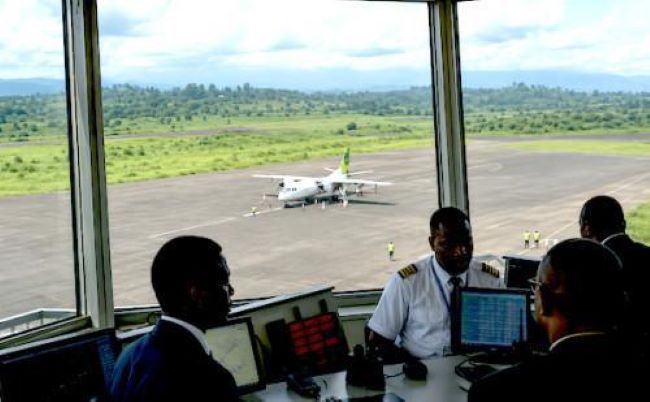
Maroua would require even broader upgrades, including modernized infrastructure, improved air navigation systems, enhanced security equipment, and a new control tower.
“For Maroua to fully meet international airport standards, ASECNA’s capabilities would need to be strengthened, a compliant control tower would need to be built, and appropriate navigation and safety equipment would have to be installed,” a source close to the project said.
Beyond the initial investment, maintaining international airport status also entails recurring costs, including equipment maintenance, rescue and firefighting services, security operations, qualified personnel, air traffic control, regular inspections, and continuous compliance with international procedures.
Those fixed costs become more difficult to justify when international traffic remains limited. According to industry sources, both Garoua and Maroua airports currently serve mainly domestic flights operated by Camair-Co, along with occasional government, charter, and special flights. Regular international commercial traffic remains limited.
This raises broader questions about public investment priorities. Maintaining the international status of Garoua and Maroua would require tens of billions of CFA francs for airports that currently handle little regular international traffic. Garoua and Maroua play an important role in connecting the country’s North and Far North regions, supporting administrative mobility, territorial continuity, security, and regional development. Those functions, however, can also be performed by domestic airports without meeting all the requirements associated with regular international operations.
This is the debate now facing policymakers. Any decision to remove the airports’ international status would not mean closing them. Both facilities could continue handling domestic flights, as well as authorized charter and special flights. The main change would concern their ability to receive scheduled international commercial services.
Some aviation stakeholders argue that such a move would allow Cameroon to concentrate limited public resources on airports with established international traffic, particularly Douala and Yaoundé-Nsimalen, while preserving domestic air links with the country’s northern regions.
Others warn that downgrading the airports could be viewed as a symbolic setback for northern Cameroon, where transport infrastructure remains a sensitive issue in regional development. No official decision has been announced.
However, with certification yet to begin and compliance costs expected to be substantial, the government now faces a choice: invest to preserve the international status of Garoua and Maroua, or redefine their role within Cameroon’s airport network.
More broadly, the issue highlights a wider challenge for Cameroon ahead of the ICAO audit. The country must demonstrate that it can balance international aviation safety standards with the financial sustainability of its airport infrastructure and the economic realities of operating low-traffic facilities.
Source: Business in Cameroon


