
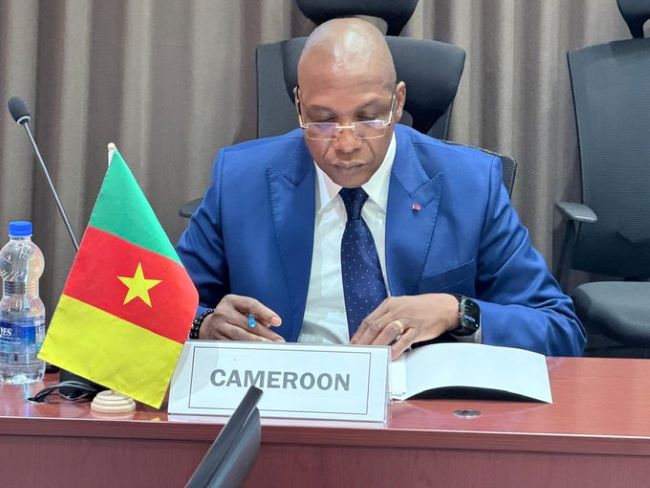
Cameroon joins Board of the Africa Centres for Disease Control and Prevention
Cameroon has secured a seat on the Board of the Africa Centres for Disease Control and Prevention (Africa CDC) for the first time, marking a significant development in the country’s participation in continental public health governance.
The country was elected for a three-year term to represent the nine Central African states on the board, according to Cameroon’s Minister of Public Health, Dr Malachie Manaouda, who announced the development during the institution’s 16th Board meeting in Addis Ababa, Ethiopia.
The appointment places Cameroon in a position to contribute to decisions on Africa’s health security, disease preparedness, institutional reforms and efforts to reduce the continent’s dependence on external support for essential healthcare services.
In a statement shared on his official social media account, Dr Manaouda described the election as an opportunity for Cameroon to advance the interests of Central Africa while supporting reforms aimed at strengthening the continental health institution.
The minister said discussions at the 16th Board meeting focused on institutional performance, reports on ongoing activities and the reforms required to strengthen Africa CDC’s effectiveness in responding to public health challenges.
He emphasized the importance of moving Africa from dependence to ownership and from vulnerability to resilience, arguing that the continent needs a stronger and more responsive public health institution capable of delivering measurable improvements in healthcare.
Particular attention was given to the regional health logistics warehouse in Douala, Cameroon, which forms part of the African Union’s continental logistics infrastructure. Dr Manaouda stressed that the facility must play a meaningful role in improving the distribution of essential medical supplies across Central Africa.
According to the minister, the effectiveness of Africa’s health supply chains should be measured not simply by the availability of medical products but by how quickly those supplies reach healthcare professionals and patients.
The Douala facility is expected to support regional health emergency preparedness and improve access to medical supplies, particularly during disease outbreaks and other public health emergencies.
Dr Manaouda also identified sustainable financing, African health sovereignty and rigorous monitoring of results as priorities Cameroon intends to champion during its three-year mandate.
His remarks reflect growing calls for African countries to strengthen domestic and regional health financing, improve coordination and build more resilient healthcare systems capable of responding to emerging threats.
The minister pledged that Cameroon would make an active contribution to the institution’s work while maintaining accountability to the Central African region, the African Union and the populations served by continental health initiatives.
Cameroon’s election comes as Africa CDC continues to pursue reforms aimed at strengthening Africa’s capacity to prevent, detect and respond to disease outbreaks while reducing reliance on external financing and emergency assistance.
For Central Africa, a region that has experienced recurring infectious disease threats and persistent healthcare infrastructure challenges, representation on the board offers an additional avenue for advancing regional priorities within the continent’s public health agenda.
Cameroon’s three-year mandate will provide an opportunity to translate those priorities into stronger regional coordination, more effective medical supply chains and measurable improvements in public health preparedness.
Source: Pan African visions


