
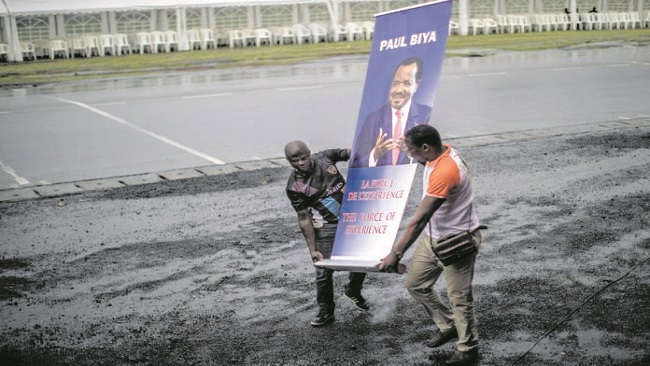
CPDM sets up candidate selection committees in Yaoundé and Douala
Cameroon People’s Democratic Movement (CPDM) has introduced special arrangements to select candidates for the February 7, 2027, legislative and municipal elections in Mfoundi, Yaoundé, and Wouri, Douala. The decision comes after months of disagreements among party officials in Mfoundi over preparations for the vote. Two directives signed on November 11, 2026, by President Paul Biya, the party’s national chairman, assign candidate selection in these two divisions to special committees, separate from the regular structures established in other constituencies.
For the legislative elections, the selection process includes divisional committees. For the municipal elections, Directive No. 002 provides for municipal selection committees supervised at the divisional level. Both procedures establish specific arrangements for Mfoundi and Wouri. The special committees will participate in selecting candidates, while the party’s central commission retains responsibility for formally approving candidate lists.
The new arrangements come after disputes emerged among CPDM officials in Mfoundi during preparations for the elections. On August 31, 2026, Laurent Serge Étoundi Ngoa, head of the Central Committee’s permanent divisional delegation, appointed several supervisors and special representatives to assist local section presidents with election preparations. Those selected included Philippe Mbarga Mboa, Séraphin Magloire Fouda, André Mama Fouda, and Augustin Edjoa.
The appointments drew objections from Gilbert Tsimi Evouna, head of the Central Committee’s permanent regional delegation for the Centre Region. According to an investigation published on September 14 by Mutations journalist Jean De Dieu Bidias, Tsimi Evouna criticized Étoundi Ngoa for making the appointments without prior consultation.
On September 9, members of the Mfoundi II section demonstrated outside CPDM headquarters to protest the appointments. The dispute also prompted intervention from Jean Nkueté, secretary-general of the Central Committee. In correspondence reported by Mutations, Nkueté described the August 31 directive as inappropriate and inconsistent with the instructions issued for election preparations.
He warned that the appointments risked creating frustration among local section presidents. The secretary-general also emphasized the need to respect the representation of different social groups and ensure the participation of women and young people. His instructions specifically mentioned the Mfoundi and Wouri sections, calling for particular attention to the diversity of local communities throughout the electoral process. The disagreements had not been fully resolved a month later. In another investigation published on October 10, Jean De Dieu Bidias reported that Étoundi Ngoa had retained the officials he initially appointed despite objections from Tsimi Evouna and Nkueté.
However, the November 11 directives do not establish that the special committees were created in response to this dispute. Their implementation now raises questions about how responsibilities will be divided among committee members, permanent party delegations, and local section leaders. The next appointments should help clarify the roles Gilbert Tsimi Evouna and Laurent Serge Étoundi Ngoa will play in the candidate selection process in Mfoundi. The central commission, chaired by the Central Committee’s secretary-general, retains final authority over candidate nominations and the resolution of internal disputes.
Source: Sbbc


