
Parliamentary and Municipal Elections: Cameroon needs a new president not another election cycle
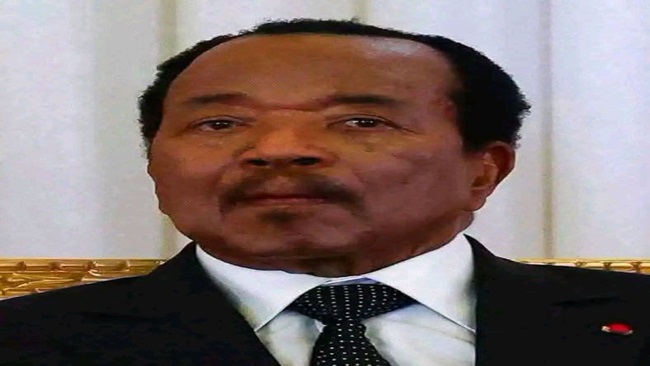
After meeting Prince Albert of Monaco, President Biya appears determined to move ahead with parliamentary and municipal elections, putting aside the possibility of another postponement that had been discussed amid financial constraints and concerns within his ruling Cameroon People’s Democratic Movement (CPDM) about retaining its parliamentary majority.
Cameroon Intelligence Report sources in Yaoundé the nation’s capital hinted that the prospect of another delay was being ruled out; while a ruling CPDM party official recently suggested that a presidential decree convening voters could be issued on November 6. The elections are expected in 2027, although the formal timetable remains subject to official confirmation.
But beyond the political calculations, the financial considerations and the manoeuvres within the ruling CPDM, there is a much bigger question that deserves national and international attention: Will these elections change anything fundamental about the way Cameroon is governed? The honest answer is that they are unlikely to. Biya, his Minister of State-Secretary General at the presidency Ferdinand Ngoh Ngoh including Prime Minister Dion Ngute are very much aware that the problem in Cameroon is bigger than Parliament and town councils.
Cameroon’s political difficulties cannot be reduced to the composition of the National Assembly or the distribution of municipal council seats. They are rooted in a system of governance that has remained largely unchanged for more than four decades.
Since 1982, Biya has occupied the highest office in the land. During this extraordinary period, generations of Cameroonians have been born, educated, entered the workforce and raised families under the same presidency.
The country has witnessed political, economic, technological and demographic transformations across the world. Yet its central political leadership has remained remarkably resistant to renewal. This is the fundamental contradiction at the heart of Cameroon’s political predicament.
Parliamentary elections can produce new legislators. Municipal elections can bring new councillors and mayors into office. Opposition parties can win seats, and the ruling CPDM party can retain its majority. These are important democratic exercises. But they do not automatically transform the political architecture within which those institutions operate.
When Biya and his kinsmen remain overwhelmingly dominant! When institutions including the Cameroon Football Federation struggle to exercise genuine independence and when political accountability remains inadequate, changing the occupants of parliamentary and municipal offices risks becoming an exercise in political rearrangement rather than national renewal. We of this publication believe that our nation does not simply need different faces in familiar offices but a fundamentally different approach to leadership and governance.
Much of the political conversation surrounding the forthcoming elections appears preoccupied with whether the CPDM will retain its parliamentary majority. That is understandable from the perspective of a governing party seeking to preserve its political influence. But the interests of a political party must never be confused with the interests of an entire nation.
The central question should not be whether the CPDM wins more seats or whether the opposition manages to take a greater share of parliamentary representation. It should be whether the political process produces institutions capable of addressing the everyday concerns of ordinary Cameroonians.
Can the next Parliament guarantee stronger oversight of public expenditure? Can it hold the executive accountable? Can it confront corruption without political interference? Can it create an environment in which public resources serve the public rather than privileged interests?
Can municipal councils deliver better roads, sanitation, healthcare infrastructure, employment opportunities and essential services? These are the questions that matter.
A National Assembly and a Senate that merely endorses executive decisions, regardless of the number of opposition legislators it contains, will not deliver the democratic transformation Cameroon needs. Equally, municipal councils that lack meaningful autonomy and adequate resources cannot be expected to revolutionise local development. Cameroon needs institutions that work, not simply institutions that exist.
There is something profoundly troubling about a nation of more than 30 million people continuing to organise its political future around the leadership of one incompetent individual who has occupied the presidency since the early 1980s. Political renewal is not an insult to that individual. It is a democratic necessity.
Cameroon needs help from its diaspora and a new generation of political leadership with fresh ideas. Cameroon needs a head of state who understands that leadership is not measured by the number of years spent in office, but by the quality of life citizens enjoy under that leadership. Cameroon needs a decent man or woman as head of state that places national development above party survival. Above all, Cameroon needs a president who recognises that public office is a responsibility entrusted by the people, not a permanent possession. A new head of state therefore is the beginning of the conversation, not the end of it. A change of president in Yaoundé must therefore represent more than a change of personality. It must mark a change of political culture.
It is evidently clear that the current presidency does not understand the pain of being unemployed, the frustrations of young graduates, the struggles of small businesses, the deteriorating conditions of public services and the legitimate demand for greater political participation. Cameroon cannot continue to postpone its future while repeatedly rearranging the institutions of its present.
Parliamentary and municipal elections remain important. Cameroonians should not be discouraged from participating in them, nor should the significance of representation at the national and local levels be dismissed. However, the population must not be persuaded that another electoral exercise, by itself, constitutes the political transformation the country requires. The national debate must go further.
Cameroon must begin to think beyond the political arrangements that have defined its past four decades. It must confront the question of succession, leadership renewal and the kind of country it wants to become over the next generation. The future cannot indefinitely remain hostage to the political calculations of one party or the decisions of one individual popularly known as “we thank the head of state”.
Another Parliament may emerge, another Senate may be born and another generation of mayors may take office. The CPDM may even retain its so-called majority, or the opposition may make gains. But unless these developments are accompanied by a fundamental change in the country’s political direction, the ordinary Cameroonian may wake up the morning after the elections to discover that very little has changed.
Biya and his gang must therefore recognise the distinction between holding elections and achieving democratic renewal. Our nation needs more than another electoral calendar. It needs more than another parliamentary majority. It needs more than a reshuffling of political positions. It needs a new head of state, a new political vision and a new social contract with its people.
After more than four decades under the same president, the argument for political renewal is no longer premature. It is a legitimate and urgent national conversation. The next chapter of Cameroon’s history must be about the country and its people, not the indefinite continuation of one man’s political era.
By Soter Tarh Agbaw-Ebai


