
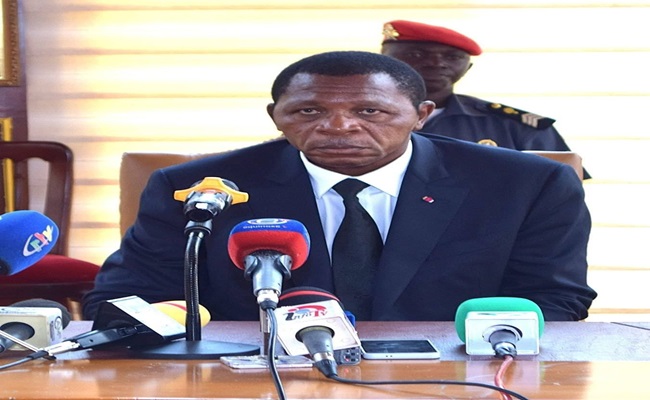
Atanga Nji: 14,502 census workers still unpaid
More than three weeks after Cameroon completed its latest population and agricultural censuses, 14,502 field workers have yet to receive their pay, while nearly 7,000 complaints remain unresolved. A World Bank support mission has called for faster payments, but insists that the process must comply with financial procedures to prevent expenses from being rejected.
The unpaid workers took part in Cameroon’s fourth General Population and Housing Census (RGPH) and the General Census of Agriculture and Livestock (RGAE), whose field enumeration operations officially ended on September 15, 2026. Their situation was brought to the attention of a World Bank mission supporting the Harmonizing and Improving Statistics in West and Central Africa (HISWACA) project, according to a project statement published on October 7.
At the Central Bureau of Censuses and Population Studies (BUCREP), representatives of the mission and the national coordination teams for both censuses spent nearly four hours reviewing the difficulties encountered. Beyond the unpaid wages, nearly 7,000 complaints remain pending at the project level. HISWACA said their validity has yet to be established, but did not specify the nature of the complaints or how many relate directly to worker payments.
To resolve the payment delays, the mission recommended that HISWACA immediately send both national coordination teams a detailed note specifying the documents required to process outstanding payments. RGPH and RGAE officials must then prepare compliant payment files based on worker lists that have been checked and validated before submission to the project.
The World Bank team emphasized the need to follow financial procedures to prevent certain expenses from being rejected or declared ineligible for project financing. Payment of the outstanding wages therefore depends on the institutions involved providing the required supporting documents. However, the statement does not identify the precise causes of the delays or establish where the main administrative bottlenecks lie.
The difficulties follow several months of work on the two censuses, whose data collection began on April 24, 2026. Initially scheduled to last five weeks, the operation received two extensions before its official conclusion on September 15. The statement provides no details on the total amount owed, how the unpaid wages are distributed between the two censuses, or when the affected workers can expect to receive their money.
More Statistical Surveys Expected by the End of 2026
The World Bank mission also reviewed major statistical operations financed through HISWACA and carried out by Cameroon’s National Institute of Statistics (INS). The seventh Multiple Indicator Cluster Survey (MICS7) has completed data collection from 15,610 households, including those in refugee camps. Its results are expected to be published by the end of 2026.
The sixth Cameroon Household Survey (ECAM6), meanwhile, was scheduled to begin the first of three data collection rounds on October 5. The survey covers 1,368 clusters outside refugee camps and 205 clusters within them. The third General Enterprise Census (RGE3) plans to train trainers in October, followed by another data collection phase from November 1 through December 31. Preparations are also underway for Cameroon’s sixth Demographic and Health Survey (EDSC-VI), scheduled for 2027, with plans under consideration to use artificial intelligence-assisted tools.
As HISWACA completes its first year of implementation, the World Bank mission has recommended that beneficiary institutions improve their documentation of results from financed operations so their performance can be assessed. In the immediate term, however, two unresolved issues remain: the payment of 14,502 census workers and the processing of nearly 7,000 outstanding complaints.
Culled from Sbbc


