
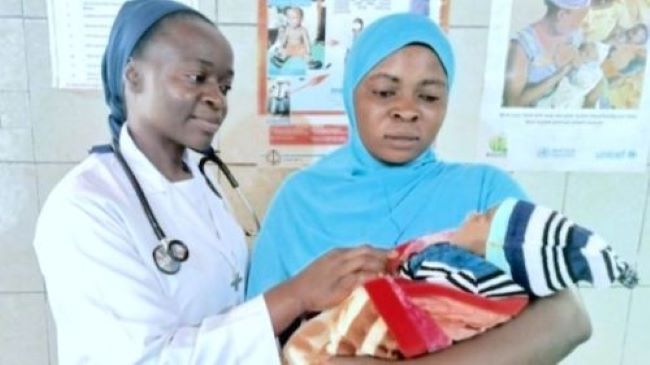
Ambazonia Crisis: Holy Union Sisters keep medical services running in Baba 1
In the village of Baba 1 in Cameroon’s Northwest Region, the Holy Union Sisters continue to provide health services despite insecurity, poverty and difficulties recruiting staff in this rural area. Their work, documented by Vatican News, highlights the fragility of access to healthcare in areas affected by the Anglophone crisis, where the departure of qualified personnel has made it even harder for health facilities to operate.
The sisters have been based in Baba 1 for several decades and work at St. Monica Catholic Medical Center. They serve a remote community with poor infrastructure, limited access to electricity and safe drinking water, and severe economic hardship. The congregation itself describes Baba 1 as a community affected by the conflict, where access to safe water remains a daily concern.
In its article, Vatican News describes the Holy Union Sisters as the only religious community still present in the immediate area. The description mainly illustrates the growing isolation of their mission. However, the claim appears to refer to Baba 1 and its surroundings rather than the Northwest Region as a whole, where other Christian institutions and faith-based health facilities remain active.
At St. Monica, the sisters care for a largely low-income population. Health needs are compounded by other vulnerabilities, including child malnutrition and limited access to water. Earlier reports by the congregation also describe agricultural and nutrition initiatives developed in Baba 1 to support women and children, some of which were disrupted by violence.
Staff shortages worsen the difficulties
Beyond insecurity, the main challenge is staffing. Health facilities in remote areas struggle to attract and retain qualified professionals.
“Very few people are willing to work in such a precarious and underserved environment, and those who do come demand salaries far higher than the community can afford,” Vatican News reported.
This shortage directly affects the ability to maintain regular healthcare services. It also highlights a broader constraint: in conflict-affected areas, the existence of a health center alone does not guarantee access to care. Staff, medicines, equipment and sufficient financial resources are also needed to keep it operating.
St. Monica Catholic Medical Center has been one of the community’s main healthcare facilities for several years. Official Cameroonian health-sector documents also list the facility in the Ndop health district.
A presence maintained despite the crisis
The Holy Union Sisters do not appear to be considering leaving Baba 1. Their presence in this part of Cameroon dates back several decades and is part of a broader mission in healthcare, education and social support. The congregation says it has been present in Cameroon since 1931 and has gradually expanded its work into several regions of the country.
In the Northwest Region, their continued presence has become especially significant since the security situation deteriorated. Violence has disrupted travel, economic activity and some community initiatives, while making it more difficult to recruit professionals willing to work in rural areas.
For the sisters, the decision to remain is also linked to the resilience of the residents they serve. “Their courage and their ability to hope, even in the face of adversity, are for them a source of evangelization. It reminds them that mission is never a one-way gift, but a shared journey,” Vatican News reported.
More broadly, their continued work in Baba 1 highlights the challenge of maintaining essential services in areas affected by prolonged insecurity. In such places, the closure of a health facility or the departure of medical staff can quickly reduce treatment options for communities already facing geographic isolation and economic hardship.
The Holy Union Sisters are therefore not simply a symbol of missionary resilience. They are also part of an increasingly fragile local health system. In Baba 1, the main challenge is ensuring that their work can continue by securing the staff, funding and equipment needed to provide healthcare in an environment where needs remain high.
Culled from Business in Cameroon


